Are Pink Dolphins Dangerous? What to Know Before Your Koh Samui Boat Tour
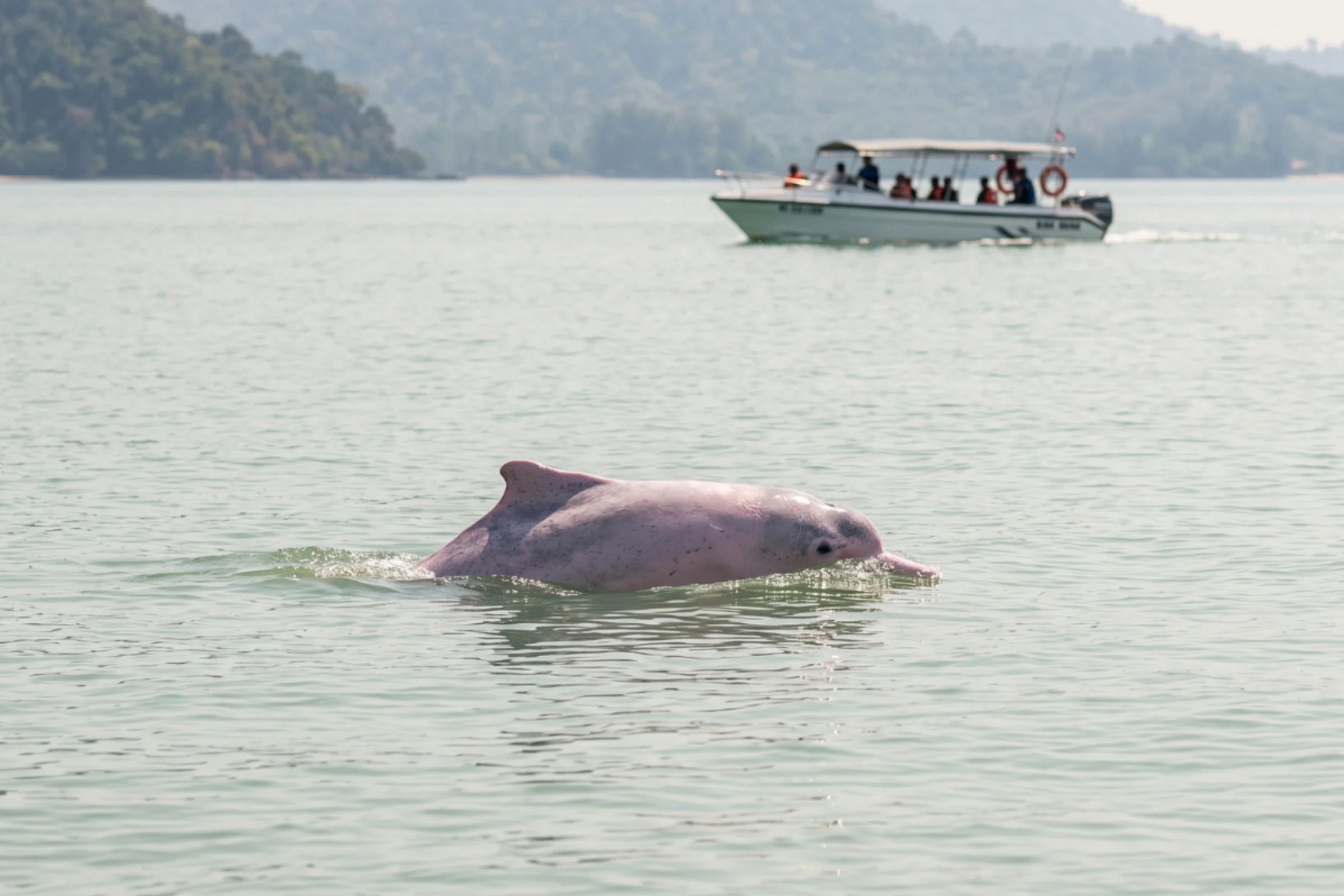
It is a fair question, and one people usually ask quietly, right before booking. Sharks have a reputation; dolphins mostly do not, but a wild animal the length of a small car, in open water, with the word “wild” doing a lot of work in the sentence, is worth asking about before you put a family on a speedboat for the morning.
The short answer: no. Pink dolphins are not dangerous to people, and on a Koh Samui spotting trip you are very unlikely to get close enough for the question to arise. The longer answer is more useful, because it covers the two things that actually determine how the day goes: how these animals behave around boats, and how the boat itself is run.
Are They Aggressive?
No. Indo-Pacific humpback dolphins are shy, cautious, coastal animals, and the consistent finding across the places they are studied is that they avoid boats rather than seek them out.
- Not human predators: They eat small fish and do not view humans as food or a threat.
- Avoidance behavior: They naturally keep their distance from boats rather than approach or bow-ride.
- No history of attacks: There are no recorded incidents of them harming people anywhere.
- Still wild animals: Touching or swimming with them is prohibited to prevent defensive reactions and protect the species.
Worth turning the question around, because it is the more honest framing. The risk in this encounter runs mostly the other way. Humpback dolphins live close to shore in small home ranges they cannot leave, which makes repeated boat pressure a genuine problem for them. The question guides think about is not whether the dolphin is safe to be near, but whether the boat is being handled well enough to leave the animal alone.
Boat Safety Standards on the Tour
This is where the real safety conversation lives. You are spending several hours on a speedboat in open water, and the things that matter are ordinary maritime ones rather than anything with fins.
Thai tourist boats operate under the Navigation in Thai Waters Act and the Thai Vessel Act, which cover registration, survey, crew competency, and the safety equipment a passenger vessel must carry. On a properly run trip, that translates into a short, unglamorous list.
- A registered, licensed vessel with a certified skipper. Operating without valid licensing carries fines and sanctions, and licensed operators are the ones with something to lose.
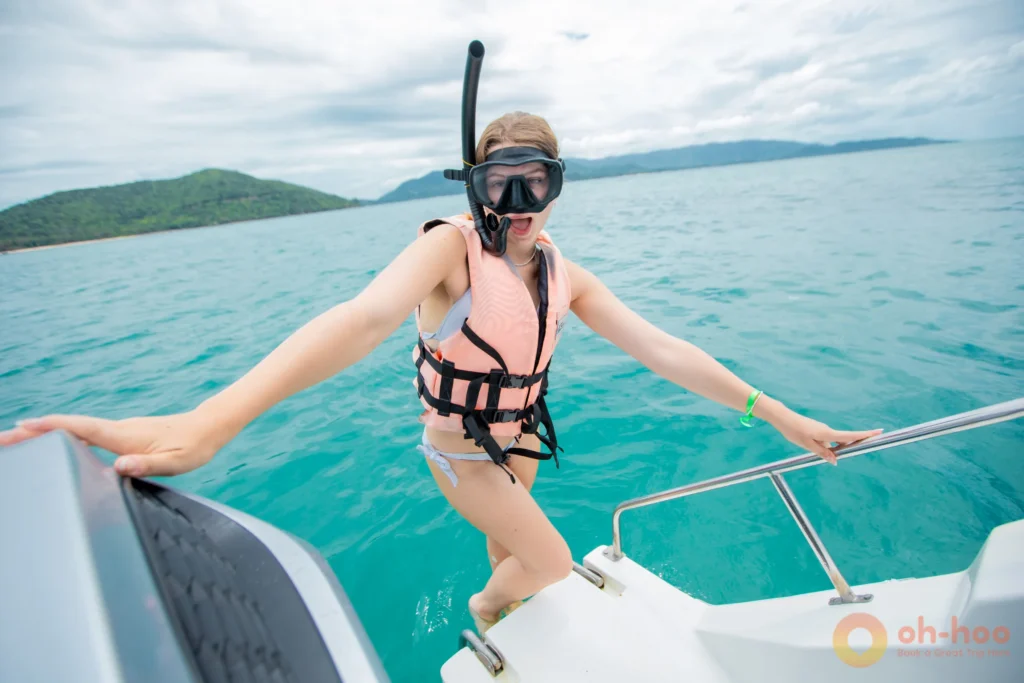
- A life jacket for every passenger, carried and offered, not stored somewhere out of reach. Firefighting equipment is likewise a legal requirement, not an extra.
- Accident insurance included in the ticket. This is standard on reputable tours and is one of the quickest things to check on a product page before you book.
- An English-speaking guide on board, which matters more than it sounds safety briefings are only useful if everybody on the boat understands them.
- Weather rules that are actually applied. Local authorities restrict boat activity in rough seas and during weather advisories, and a good operator postpones or cancels with a full refund rather than sailing anyway. An operator who never cancels is not a lucky one.
A short pre-booking check covers most of it: does the listing state that life jackets and insurance are included, is there a named guide, and is there a clear bad-weather cancellation policy? Three yeses is a well-run boat.
On the day, the same logic applies to you. Wear the life jacket if you are not a confident swimmer, keep small children in theirs for the whole crossing, stay seated while the boat is underway, and take the seasickness tablet before departure rather than after you need it.
What to Do If You See One
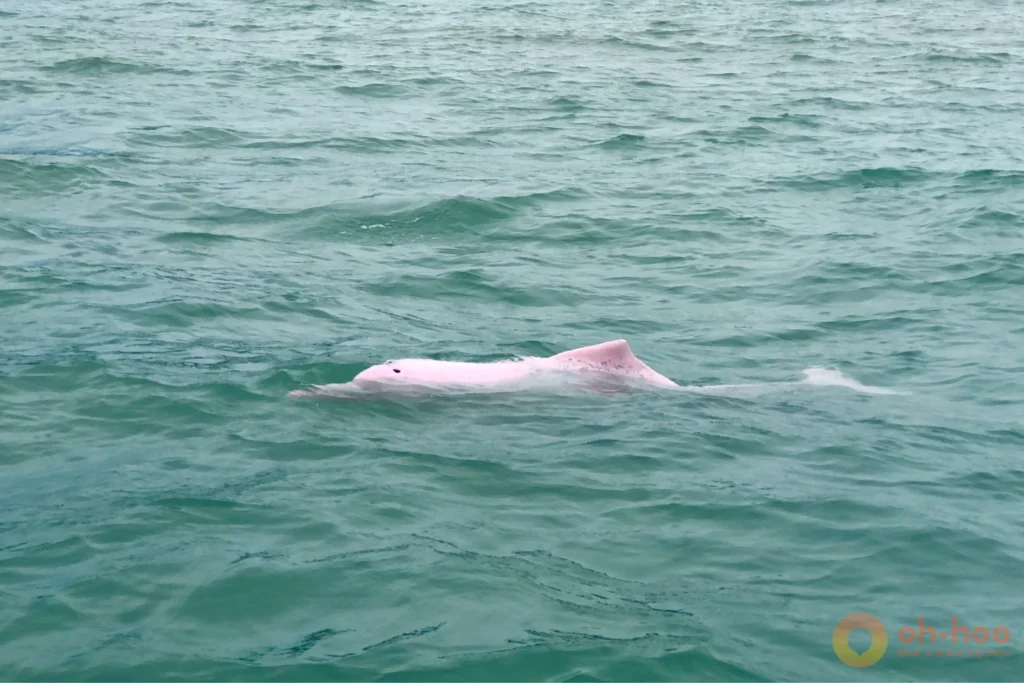
The moment itself is short and usually unannounced: a fin, a pale back rolling through the surface fifty metres off the bow. What happens next is mostly about not ruining it, for the animals or for the other people on the boat.
- Stay seated and stay put. The instinct is to stand and rush to one side; on a small boat, that shifts the trim, blocks everyone else’s view, and is the single most likely way anyone gets hurt on a dolphin trip.
- Keep the noise down. Shouting, banging the hull, and revving engines all push the animals away, which is exactly the opposite of what you want in the next five minutes.
- Let the skipper position the boat. The correct approach is slow, parallel, and at a distance, holding position and letting the dolphins choose whether to come closer. Chasing them produces worse sightings, not better ones.
- Never feed them, and say no if anyone offers to. Feeding wild dolphins changes their behaviour, teaches them to associate boats with food, and is the single most damaging thing tourism does to this population.
- Do not get in the water to approach them. Spotting trips are watching trips swimming and snorkelling happen elsewhere in the day, away from the animals.
- Film in short bursts rather than continuously. Sightings come and go, and the people who spend the whole time behind a phone are usually the ones who describe it afterwards as brief.
FAQ
There is no record of it for this species. They are small coastal fish-eaters that avoid boats and people, and the documented concern in the scientific literature is boat disturbance affecting the dolphins, not the reverse.
Yes, with normal boat sense. Keep children in life jackets for the whole trip, keep them seated while the boat is moving, and choose a verified Pink Dolphin Spotting Tour by Speedboat From Koh Samui that includes life jackets and accident insurance. The dolphins are not the part to worry about.
No, and you should not want to. These trips are boat-based watching, and getting in the water to approach a protected wild animal counts as harassment. The sightings are better from the boat anyway.
Booking a Trip That Does It Properly
The safety of a pink dolphin day comes down to the operator rather than the animal: a licensed boat, jackets and insurance included, a guide who briefs the group, and a skipper who holds position at a distance instead of chasing a fin across the bay. Those are also the boats that get the better sightings, because a calm approach is the one the dolphins tolerate.
Pink Dolphin Spotting Tour by Speedboat From Koh Samui runs with life jackets, accident insurance, and an English-speaking guide included, and postpones with a full refund when the sea is not up to it. Sit down, stay quiet, and let them come to you.