Phuket Vegetarian Festival 2026: Dates, Rituals & Things to Do Around It
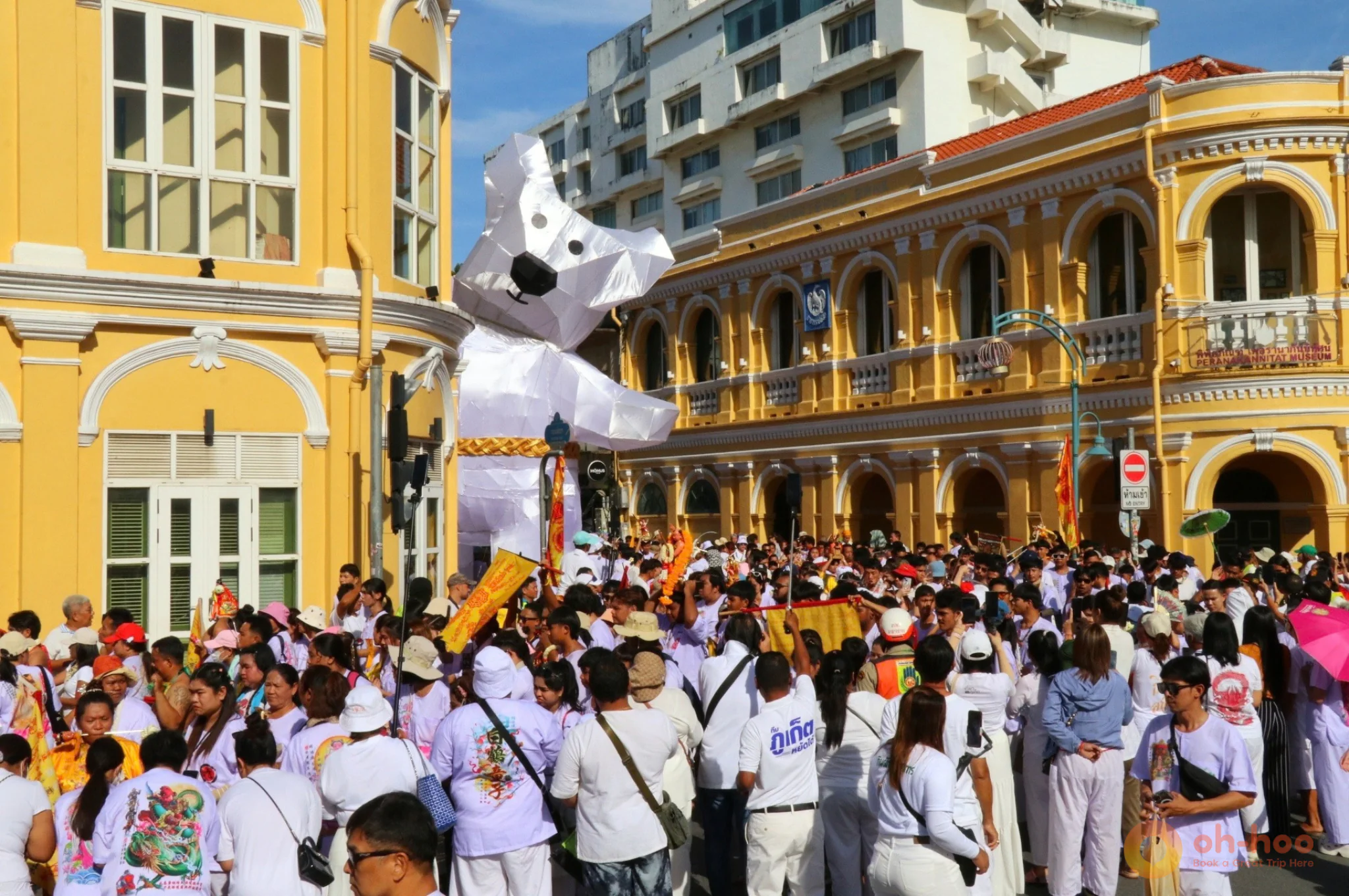
Quick Answer: The Phuket Vegetarian Festival runs 10-18 October 2026, with the pole-raising on the evening of 9 October. Expect dawn street processions, fire-walking after dark and yellowflag Jay food across the island. To attend safely, wear white clothing, protect your ears and lungs from loud firecrackers and heavy smoke, and keep a respectful distance from the processions.
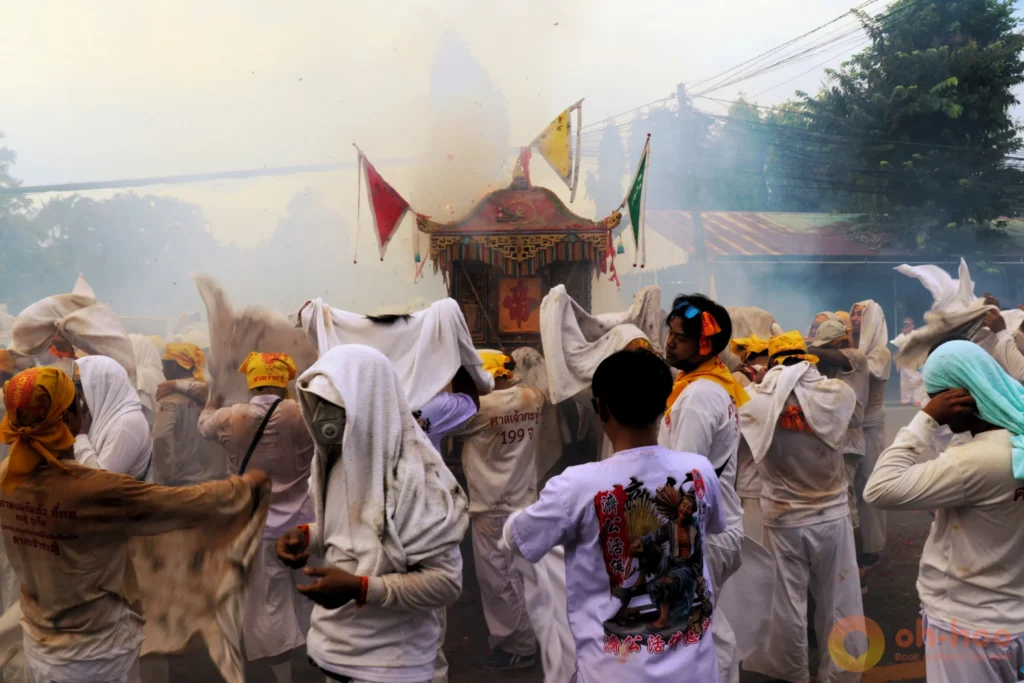
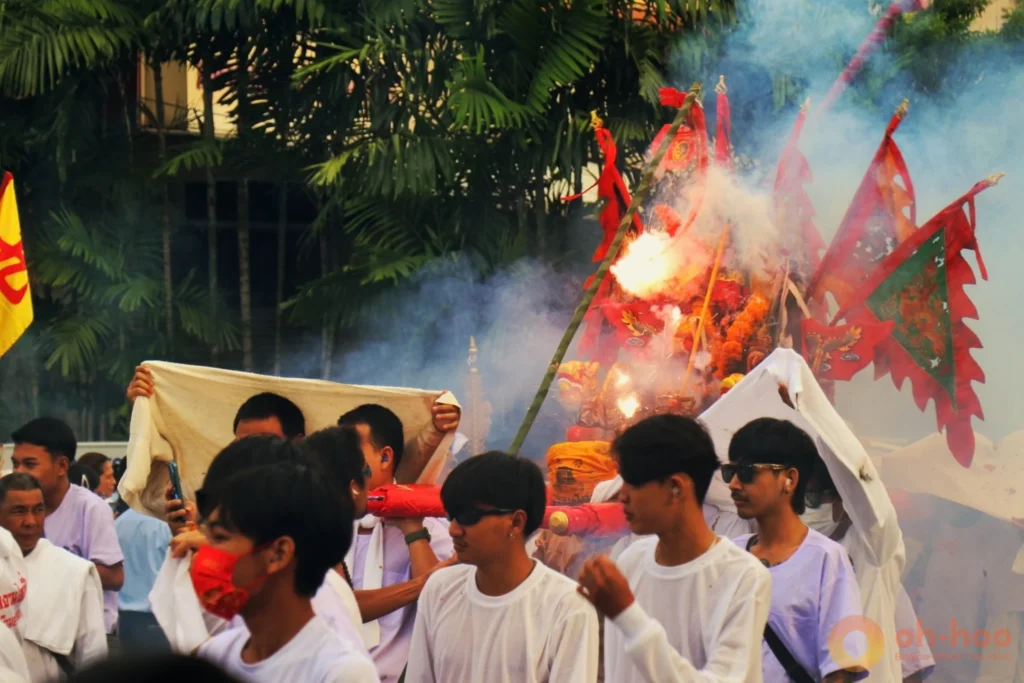
It starts before the sun does. Around five in the morning, the first firecrackers go off in Old Town, and by six the street outside your hotel is a river of people in white. Incense smoke hangs at head height, drums move closer, and then the ma song comes past – the spirit mediums, carried along in a wave of noise and smoke that has been rolling through this town since the 1820s.
Nine days, nine shrines, one island gone white and yellow. Here is how to be in the right place at the right hour.
Phuket Vegetarian Festival 2026 Dates at a Glance
The festival follows the ninth lunar month, so the dates move each year. For 2026:
| Date | What happens |
| 9 Oct (eve) | Go Teng pole raised at each shrine – the festival officially begins at midnight |
| 10-18 Oct | Nine days of ceremonies, daily processions and Jay food island-wide |
| 18 Oct (night) | Final send-off at Saphan Hin, running past midnight |
| 19 Oct | Pole lowering, and the island exhales |
Each shrine takes its own day for the big street procession – this is the schedule to plan around (as of 2026):
| Date | Shrine | Where | Starts |
| 11 Oct | Naka (Jor Su Kong) | Ban Naka, Wichit | around 7:30am |
| 12 Oct | Sapam | Thepkasattri Road | around 7:20am |
| 13 Oct | Sam Kong | Phuket Town | around 7:45am |
| 14 Oct | Ban Tha Rue | Tha Rua | around 6:09am |
| 15 Oct | Bang Neow | Phuket Town | around 6:00am |
| 15 Oct | Cherng Talay | Bang Tao | around 7:00am |
| 16 Oct | Jui Tui | Phuket Town | around 8:00am |
| 17 Oct | Kathu | Kathu | around 6:45am |
| 18 Oct | Sui Boon Tong | Phuket Town | around 7:00am |
Those times are when the procession leaves the shrine, not when it reaches you – give it an hour to work through town, and check the shrine’s notice board or ask your hotel the night before.
What Is the Vegetarian Festival (and Why Phuket)?
The proper name is the Nine Emperor Gods Festival, and Phuket’s version came from the island’s Hokkien Chinese community – the tin-mining families who settled here two centuries ago and built the shrines that still run it. Islanders tell it this way: a travelling Chinese opera troupe fell ill in Kathu, kept a strict meatless diet, held the rites, and recovered. The village took up the practice, and Kathu is still one of the nine shrines.
Jay, the diet at the centre of it, goes further than vegetarian: no meat, no dairy, no eggs, no alcohol, and none of the pungent vegetables – garlic, onion, chives – believed to inflame the senses. The white clothing is the visible half of the same idea.
The piercings and fire-walking follow from the same belief: the man song is carrying a god, and what they walk across and pass through their skin is that protection made visible. Intense to watch, and a religious act performed by volunteers in front of their own families.
What the Island Feels Like During the Festival
This is not a Phuket Town event the rest of the island politely ignores. For nine days, nearly everywhere turns. Yellow flags fly outside almost every kitchen, and shrines all over the island—Kathu, Cherng Talay, Sapam, Tha Rua—run their own ceremonies, not just the town ones. You will see white clothing everywhere and hear firecrackers from before dawn right from your room. While the energy spreads across the island, Old Town remains the heart of it all, drawing the biggest crowds, the widest variety of food, and the longest processions.
If your trip falls across these nine days, you have landed on the one week a year when Phuket shows a side of itself most visitors never see. Beaches, boats and bars carry on as normal – the island just has a second thing going on, loudly, at the same time.
The Main Rituals You’ll See
The Morning Processions
The centrepiece, and the easiest to attend. A shrine’s full retinue – sedan chairs, flagbearers, drummers, ma song – moves through the streets from early morning, while shopkeepers set out fruit, tea, and incense for a blessing as it passes. Stand on a side street rather than at the shrine gates; the crowd thins further from the start.
Fire-Walking and the Blade Ladder
Held in the shrine grounds after dark, on nights each shrine announces. A bed of coals is prepared, and devotees cross it barefoot; some shrines also raise a ladder of blades. Arrive early, stay behind the marked lines, and follow the shrine staff. Nobody minds you watching – it is a public act of faith – but it is theirs, not a performance.
H3: The Last Night at Saphan Hin
On the night of 18 October, everything converges at Saphan Hin to send the gods back. It runs
past midnight, the crowd is the biggest of the nine days, and the firecrackers are on another scale
entirely. Take earplugs, wear shoes you do not love, and do not plan an early start the next day.
Eating in Phuket During the Festival
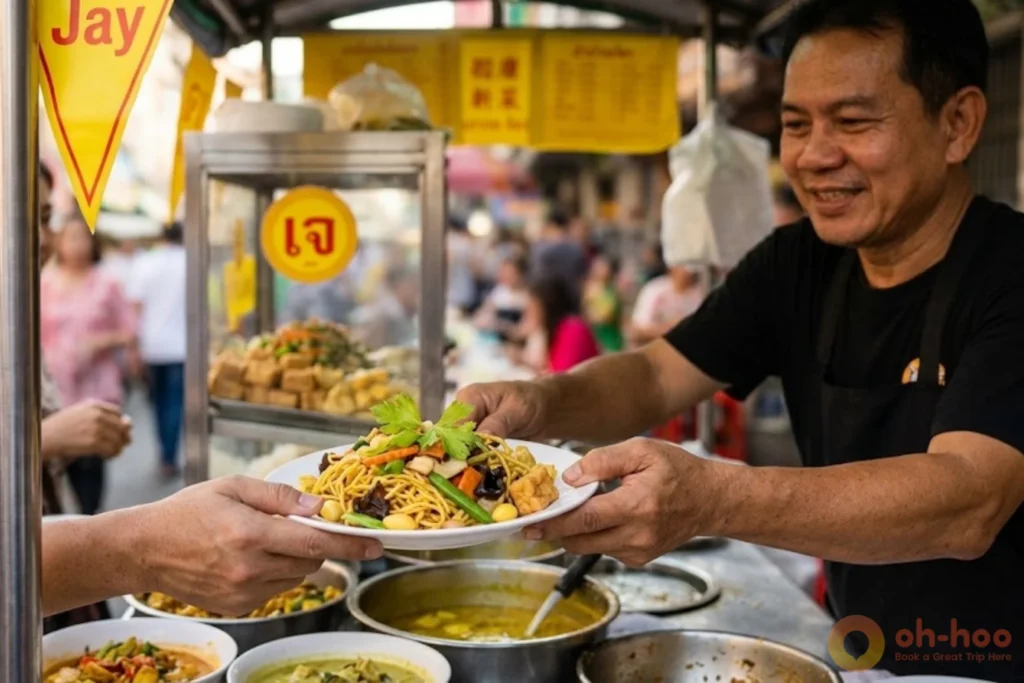
Food is half the reason to be here. A yellow flag carrying the red Thai character เจ – pronounced “jay” – means the kitchen is cooking Jay: no meat, no seafood, no dairy or eggs, no fish sauce or shrimp paste, no garlic or onion, no alcohol. That flag goes up outside an enormous number of places, and many local restaurants switch their whole menu for the nine days or close while the family takes part.
- Message ahead if you have a particular restaurant in mind – a quick check saves a wasted taxi. Hotel restaurants and the beach strips in Patong, Kata and Karon generally run their normal menus throughout.
- The Old Town streets around Jui Tui and Ranong Road become one long Jay market. Eat there.
- Go before 8am. The crullers and the fresh noodles sell out first.
What to order: Jay pad thai without egg or fish sauce; yen ta fo, the pink noodle soup, in its vegetarian version; fresh spring rolls; Chinese crullers dipped in soy milk; taro or pumpkin fried in batter. Most of it is 30 to 80 baht a plate, and committed carnivores go back for a second round.
How to Watch Respectfully and Comfortably
A little preparation turns this from overwhelming into unforgettable.
- Wear Appropriate Clothing: Wear white long sleeves, long trousers, and closed-toe shoes. White shows respect for the ritual tradition, while long sleeves and covered shoes protect your skin from flying firecracker sparks and spent casings carpeting the streets.
- Protect Yourself from Noise and Smoke: Bring quality earplugs and a light face mask. The noise from thousands of firecrackers is intense, and thick incense and firecracker smoke lingers at head height in the narrow Old Town streets. Stand well back from where firecrackers are thrown.
- Keep a Respectful Distance from Processions: Do not touch the ma song (spirit mediums) or step into their path while they are in a trance. Always ask before taking close-up photographs, lower your camera during intense spiritual moments, and give the procession plenty of room to move freely.
Make a Full Day of It: Ceremonies at Dawn, ATV in the Afternoon
Festival mornings are over by lunchtime. At five, the procession passes, you eat extremely well at seven, and by ten you are back at the hotel with a whole afternoon and a lot of adrenaline left over.
A day that works:
- 05:30 – into Old Town while the first firecrackers are going off.
- 06:00-09:00 – the procession, then breakfast at the Jay stalls.
- 09:30 – back to the hotel, shower, an hour horizontal.
- 13:00 – pickup for the jungle, trails, and the Big Buddha.
- 19:00 – fire-walking at whichever shrine is holding it that night.
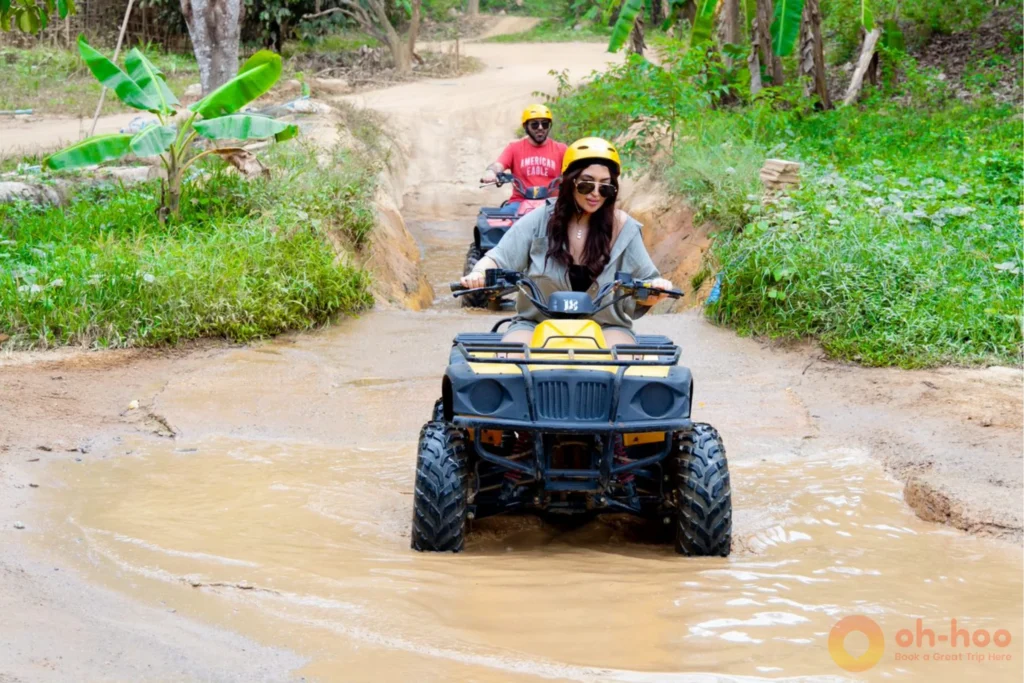
The afternoon half is the Phuket ATV and Big Buddha Tour – Jungle Ride Adventure : rubber plantations, mud, jungle track, then the hill. Packages run 30 minutes to two hours, with the Big Buddha stop built into the one-hour and longer rides. Free transfers from Patong, Kata, Karon, Rawai and Chalong, a briefing and practice loop before you set off, and helmets, raincoats, water and accident insurance included. Riders are 4 to 80, with children aged 4 to 14 as passengers rather than drivers. No riding after a drink, and not available to pregnant guests.
At the top, the 45-metre white marble Buddha looks out over Chalong Bay, with most of southern Phuket spread below the terrace on a clear afternoon. The statue’s interior is closed at present, so the terrace and the views are what you go up for – our guide to the hill covers what else is there, and our run-through of the ride answers most first-timer questions.
Saving your legs for the evening ceremony? The 1 Hour Phuket Quad Bike Tour to Big Buddha does the trail and the viewpoint in a single hour.
Beyond the Festival Days
Mid-October is a good moment to be here for reasons unrelated to the shrines: the rains ease, the sea settles after the monsoon, and the island tips into high season before the prices do. Boat trips start running reliably again, and the west coast calms down – our round-up of what to do here has the options, and the month-by-month weather guide explains why October surprises people.
FAQ
A: 10 to 18 October 2026, with the pole-raising on the evening of 9 October and the lowering on 19 October. The dates follow the ninth lunar month, so they move each year.
A: Yes. The processions are public, and visitors are welcome to watch, eat Jay food, and visit the shrines. Wear white, keep back from the ma song, and follow the shrine staff.
A: White, long sleeves and long trousers, and closed shoes rather than sandals – the streets are covered in firecracker debris. Earplugs and a light face mask make the mornings far more comfortable.
A: Many local restaurants switch to a Jay menu or close for the nine days; hotel and beach-area restaurants carry on as normal. Look for the yellow flag with the red Thai เจ (“jay”) character, and message ahead if there is somewhere particular you want to eat.
Nine Days, One Alarm Clock
Set it for five. That is the whole secret to this festival – everything extraordinary happens between dawn and mid-morning, and everyone who sleeps in hears about it afterwards from someone who did not.
Catch the procession, eat your way down Ranong Road, then take the rest of the day back: the Phuket ATV and Big Buddha Tour – Jungle Ride Adventure collects you in the afternoon, runs you through the jungle and puts you on the terrace at the Big Buddha with the whole south of the island below. Two completely different versions of Phuket in one day – and the firecrackers start again tomorrow.