How to Get to Railay Beach + Best Rock Climbing Tour for Beginners
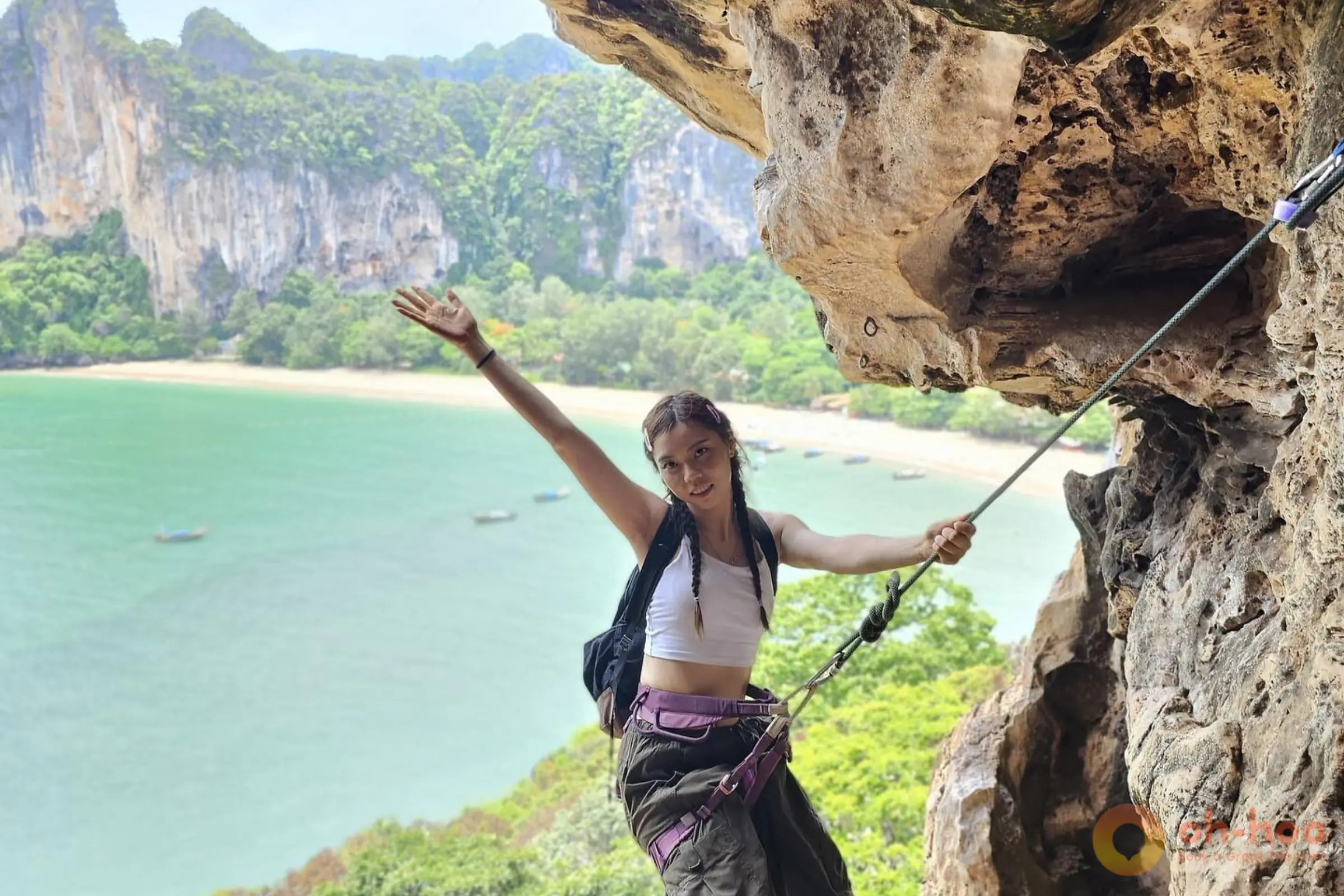
Thailand has one beach you can’t drive to. Railay, a limestone peninsula on the Krabi coast, is cut off from the mainland by cliffs so sheer that no road was ever built; the only way in is by longtail boat. Which is also, conveniently, the exact reason it became one of Southeast Asia’s most famous climbing destinations. Those same cliffs that blocked the roads run hundreds of metres of overhanging limestone straight down into the sea, threaded with more than 700 bolted routes, a Railay rock climbing playground that draws climbers from every continent through the dry season. Below: how to actually get there, what a beginner’s day on the rock looks like, and what to do at Railay if you’re not the one on the rope.
How to Get to Railay Beach
This is the question that catches most first-time visitors off guard. The answer to how to go to Railay Beach is refreshingly analogue: you get on a boat.
There are two departure points from the Krabi coast, and the choice depends on where you’re staying:
- From Ao Nang: The most common departure point. Longtail boats run continuously from Ao Nang Beach directly to Railay West or East beach, a 10 to 15 minute crossing, typically 100 to 150 THB per person, boats leave when full (or you can charter one solo for a higher fee). This is the go-to route for anyone based in Ao Nang or Krabi’s resort strip.
- From Krabi Town: Longtails run from Krabi Town’s main pier (Chao Fah Pier) to Railay East. The crossing takes about 45 minutes and costs 150 to 200 THB depending on the season. Useful if you’re staying in Krabi Town itself, less efficient otherwise.
There is no ferry, no scheduled service, and no road anywhere on the peninsula. Once you’re on Railay, you walk. This is part of the charm and part of the reason to travel light on the day.
Why Railay Is Thailand’s Climbing Capital
The geology does most of the work. Railay’s cliffs are pure limestone karst, the same rock that gives the Andaman coast its trademark vertical drama, and the climbing community has spent thirty years quietly bolting routes into every accessible face. The result: over 700 documented sport routes across the peninsula, ranging from beginner-friendly slabs at grade 5 to genuinely serious overhangs at 8b+ and above.
Two things separate Railay from other world-class climbing destinations. First, the routes start directly on the beach. You can walk from your sandwich straight into a harness and be on rock in five minutes. Second, the setting: turquoise sea on one side, jungle on the other, warm rock in your hands. Climbers coming from Yosemite or Ceuse consistently rate Railay among the most atmospheric outdoor sport-climbing venues anywhere.
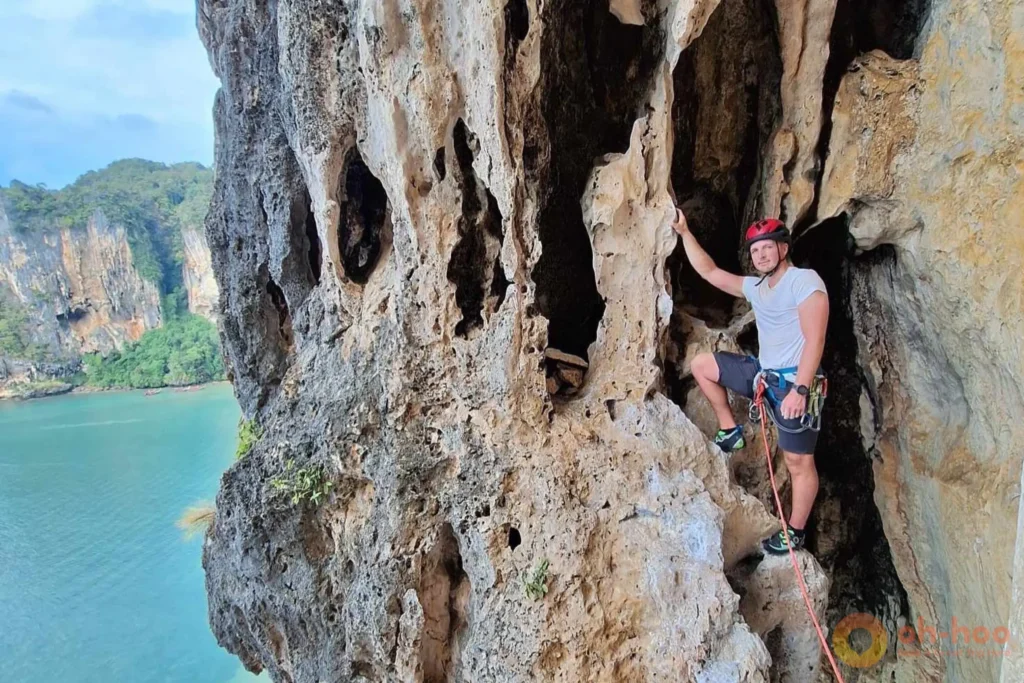
Rock Climbing for Beginners: What to Expect
Here’s the surprise: Railay is one of the world’s best beginner destinations for outdoor climbing. Serious pros come here too, but the peninsula’s core reputation is as the place where non-climbers become climbers.
A standard beginner half-day session runs three to four hours and is designed for complete first-timers. You’ll meet your instructor on the beach, get fitted with a harness, shoes, and helmet, and walk five to ten minutes to the base of the practice cliff. The morning covers safety basics, belaying, and knot work, then you climb. Most beginner walls at Railay run 15 to 25 metres and are angled gently enough that reasonably fit adults can complete a route in one or two attempts.
Physical difficulty is approachable. If you can climb a ladder without panicking and pull your own bodyweight in a controlled way, you can climb a Railay beginner route. The hardest part for most people is the mental hurdle at the top of the first climb, which is exactly what a good instructor is there for.
For beginners specifically, group size and instructor quality matter more than any other variable. Oh-hoo’s Railay Beach rock climbing tour caps sessions at 10 climbers per group with certified instructors trained in First Aid and CPR gear, safety briefing, and the walk to the wall all handled. It’s consistently reviewed as a “once in a lifetime” starter session and carries a Badge of Excellence from the review platforms.
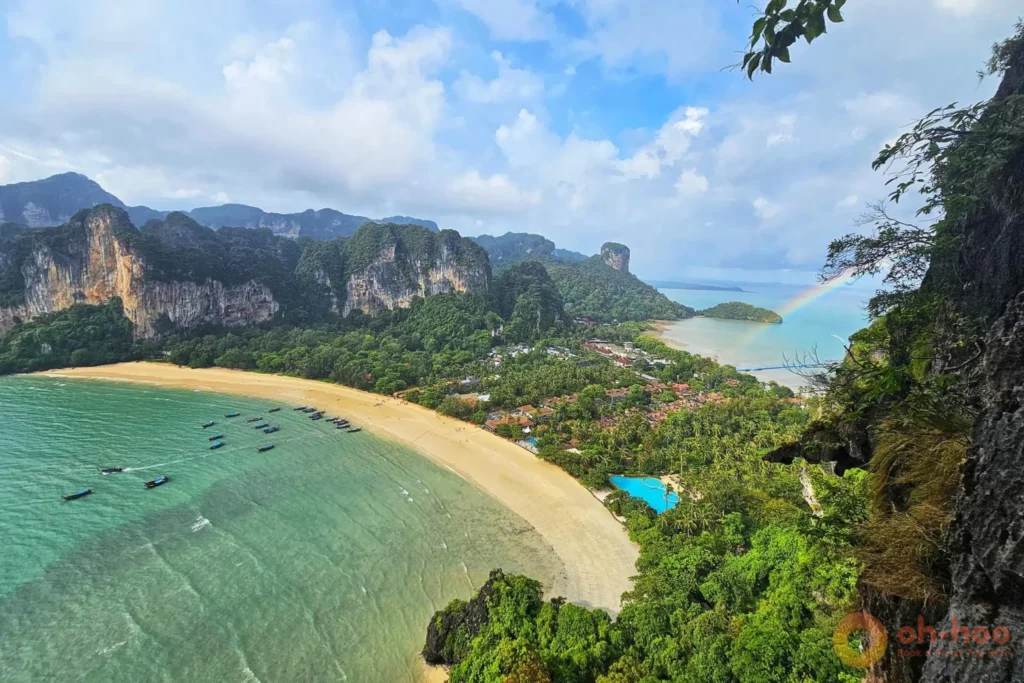
Best Time of Day & Season
Two variables to plan around: heat and rain.
- Time of day: Morning is the answer. Aim for a 9 am start. The rock is still cool from the night, the light is soft, and you’ll be off the wall before midday heat makes the limestone uncomfortable to grip. Afternoon sessions are possible but tougher, especially on the west-facing walls that catch the sun.
- Season: The dry season on the Andaman coast runs roughly from November to April, the window when Railay’s climbing scene fully wakes up. Book earlier for December through February peak dates. The wet season (May to October) still has climbable days, but rain and humidity affect route conditions, and some walls get slick. If you’re travelling in shoulder months, keep the plan flexible in case of a weather day.
What to Do at Railay Besides Climbing
Not everyone in the group is going to want a harness, and that’s fine, because Railay Beach and what to do beyond the wall runs a decent list.
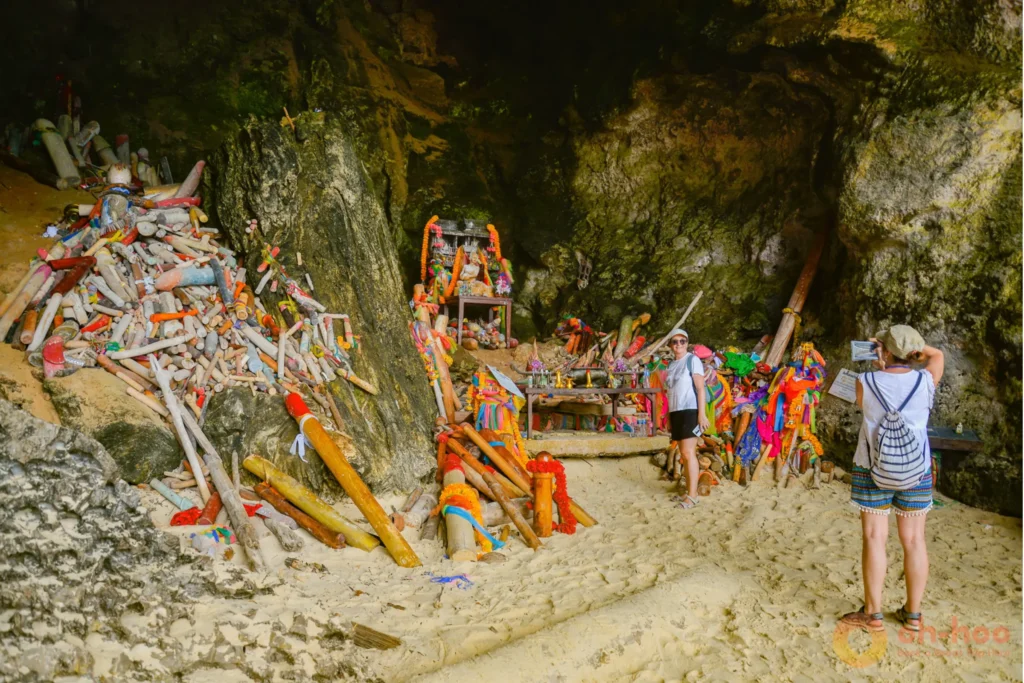
- Phra Nang Cave Beach is a five-minute walk south of Railay East. It’s arguably the most photographed beach on the peninsula, a horseshoe of white sand ringed by limestone overhangs, with a small shrine cave at one end. Longtail boats bob just offshore, selling cold coconuts. This is where non-climbers happily park for the afternoon.
- Railay viewpoint and lagoon hike. A short, steep 20-minute scramble up a rope-assisted trail from Railay East leads to a viewpoint over both beaches. Continue down the far side, and you’ll reach a hidden lagoon, muddy, dramatic, and completely worth the effort. Wear grippy shoes and expect to get dirty.
- Kayaking around the peninsula is another good non-climb option; rental kayaks are available on Railay West, and the coast is calm enough for beginners to paddle around the headland toward Phra Nang and back inside in an hour.
FAQ
No road exists. The peninsula is cut off from the mainland by sheer limestone cliffs, so the only way in is by longtail boat 10 to 15 minutes from Ao Nang, or about 45 minutes from Krabi Town’s pier. Boats run continuously through the day during the dry season.
No. Railay is one of the world’s most popular first-time outdoor climbing destinations. Beginner sessions are built for complete non-climbers. Instructors handle safety, gear, and technique, and the beginner walls are angled and graded for people who’ve never touched rock before.
Yes. Phra Nang Cave Beach alone is one of the most striking beaches on the Andaman coast, and the viewpoint hike, lagoon, kayaking, and simple beach time make Railay a rewarding day even for non-climbers. Many groups split into half climb, half beach, and meet for lunch.
Beginner half-day sessions with a licensed instructor and full gear typically run in the mid-range for guided adventure activities in Krabi, broadly comparable to a half-day snorkeling tour. Add the longtail boat fare (100 to 200 THB) if it’s not included in the package. Confirm exact pricing at booking.
Getting You On the Wall
Railay is what happens when a beach and a climbing gym stop pretending they’re different things. Warm rock, calm water, someone who knows what they’re doing tying your figure-eight for you if you’ve been thinking about trying outdoor climbing, there is no easier place in Southeast Asia to start.
Book the Railay Beach rock climbing tour with Oh-hoo Travel: small groups of no more than 10 climbers, certified instructors with First Aid and CPR training, all gear provided, and the longtail boat logistics sorted before you arrive. Show up in the morning. Bring shoes. Try something new.