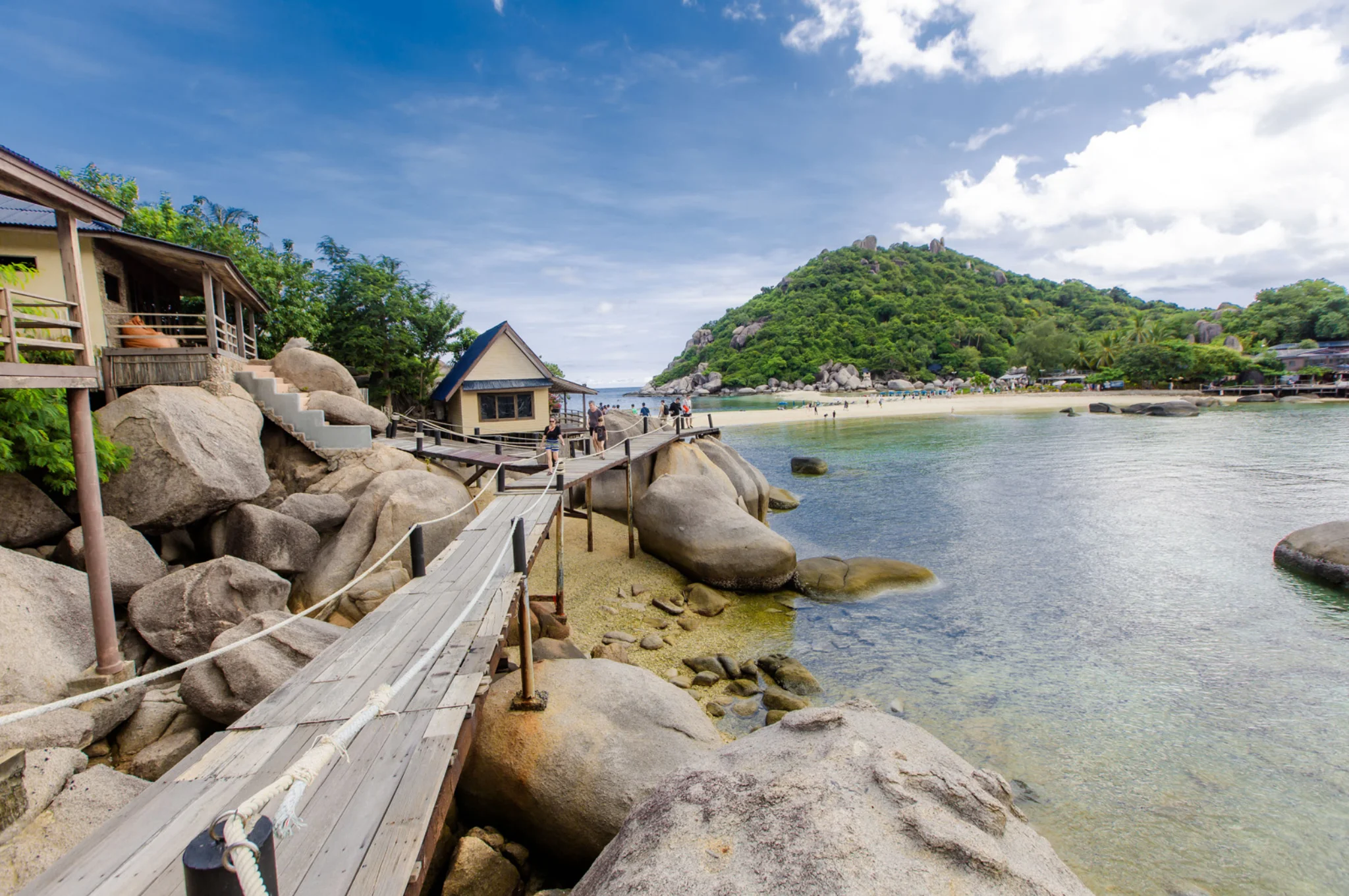
Shark Bay is the one stop on a Koh Tao snorkelling day that makes people hesitate before they get in the water. The name does all the damage: it sounds like a dare rather than a snorkelling site, and nothing on the boat quite prepares first-timers for the moment a guide says “look for the sharks” and means it sincerely.
The bay Ao Thian Ok on Thai maps sits on Koh Tao’s southeast coast, and it is named for a resident population of blacktip reef sharks that use its shallows as a nursery. They are small, they are timid, and they have no interest in you whatsoever. What they are is genuinely, reliably there, which makes this one of the few places in Thailand where an ordinary snorkeller can expect to see a wild shark.
This is a guide to that single bay: what is actually in the water, why the name is not a warning, and the conditions that decide whether you see anything. For the wider island and how a snorkelling day trip is put together, the Koh Tao snorkelling day trip guide covers the rest.
What You’ll See Underwater
Shark Bay is shallow, sheltered and sandy-bottomed, with the snorkelling zone mostly sitting between two and four metres deep before the seabed drops away towards the mooring area. Four things are worth looking for, in roughly this order.
The Blacktip Reef Sharks
- First Encounter & Visual Cues: Look down toward the sandy ocean floor—your first sign is usually a dark, elongated shadow gliding silently across the white sand in the shallow water before the shark itself comes into view. Looking through the water, you’ll spot their streamlined, grey-brown torpedo bodies, instantly recognizable by the distinctive black tips on their dorsal and tail fins.
- Species & Size: Juvenile blacktip reef sharks (about 0.5–1 meter long) patrol the very shallow waters (waist to chest depth) to stay safe, while larger adults (over 1.5 meters) cruise the deeper waters near the outer boat moorings.
- Behavior & Sightings: These sharks rarely stay still; they move continuously with a fluid, seamless rhythm. Most sightings are brief, quick passes along the edge of visibility where they fade back into the deep blue.
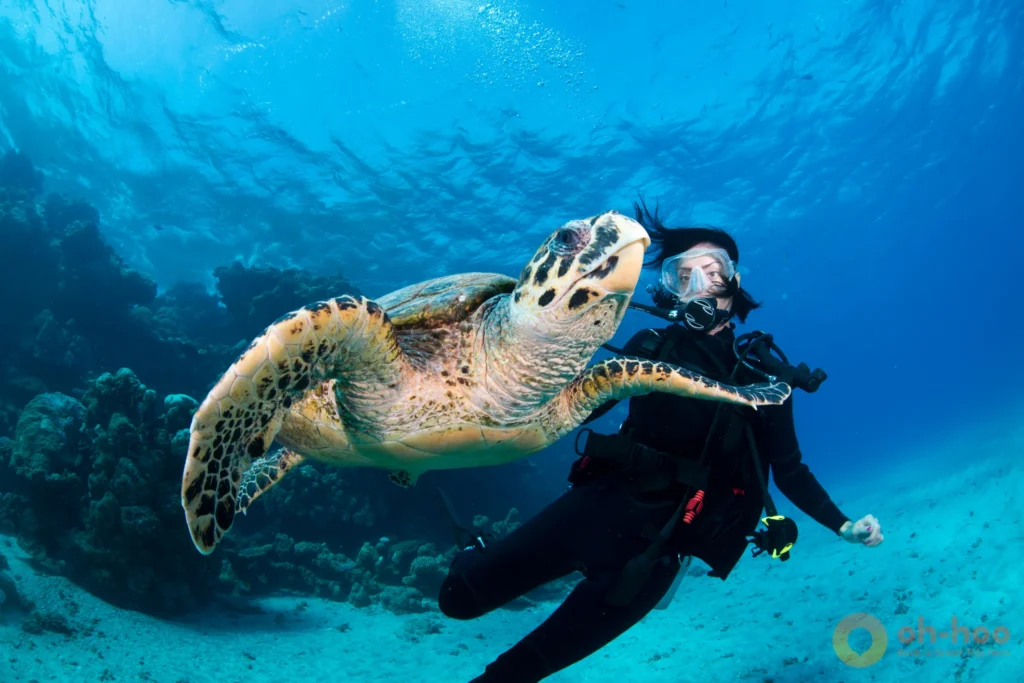
Green Sea Turtles
- Highlight Species & Surprise: Forget the myth that turtles are slow—underwater, they will completely surprise you. While they often appear calm and unhurried as they graze peacefully along the seabed, the moment they push off toward deeper water, they glide with astonishing speed and power. Keep your eyes sharp, or you might miss them in a flash.
- Reliability: Sightings are not strictly guaranteed, but they are common enough for guides to reliably point them out.
The Reef Fish
- Shallow Abundance: Dense fish populations inhabit shallow zones, including pink skunk clownfish in anemones, sergeant major shoals, parrotfish, and various butterflyfish, angelfish, damselfish, wrasse, groupers, needlefish, and triggerfish.
- Backup Value: Delivers an incredible snorkel experience on its own, showcasing vibrant marine life and diverse fish populations that make the dive truly remarkable even without a shark sighting.
The Coral Honestly
- Bleaching Impact: Past bleaching events have reduced much of the bay’s central area to coral rubble rather than vibrant reefs.
- Best Snorkel Areas: Healthier live coral remains along the eastern side and rocky edges where guides lead groups.
This is not a coral-garden stop, and nobody comes here for the reef structure. It is an animal stop: sharks, turtles, and a lot of fish over open sand.
Is It Safe?
The bay’s name describes what lives there, not a risk to swimmers. Blacktip reef sharks at Shark Bay are small, timid, and non-threatening, meaning standard safety precautions focus on general ocean awareness rather than shark danger.
Shark Behavior & Risk
- Naturally Shy: Small fish-eaters that avoid humans. The main challenge is simply getting close enough to spot one.
- Harmless Juveniles: Young sharks in the shallows pose no threat to snorkellers.
Guidelines When Encountering Sharks
- Give Space: Never chase, swim directly toward, or corner a shark.
- Move Slowly: Swim smoothly with controlled fin kicks to avoid startling them.
- Maintain Visibility: Avoid kicking up sand from the seabed to keep the water clear.
- Protect Coral: Keep fins away from shallow reefs to prevent damage and avoid injury.
Actual Hazards to Keep in Mind
- Boats & Sun: Stay within designated swimming zones, watch for boat traffic, and wear protection against strong UV rays.
- Reef & Marine Life: Avoid stepping on shallow coral or sea urchins, and give space to protective triggerfish and seasonal jellyfish.
Best Time & Conditions
Shark Bay rewards timing more than most snorkelling stops, because the headline animal moves according to its own schedule rather than the boat’s.
- Early Morning Is the Difference: The sharks are most active and most often seen in the early hours, roughly between 7 and 10 in the morning. Later in the day, sightings fall off, the bay fills with boats, and the water is stirred by traffic and swimmers. If you have a choice of departure time, take the earliest one on offer.
- Where to Look: The shallow, sandy western side of the bay towards the Sai Daeng headland is the nursery ground and the most reliable place to see juveniles. The deeper water near the moorings is where the bigger animals cruise, though visibility there is lower. Turtles turn up anywhere there is something to graze.
- Calm Water Beats Clear Skies: The bay is sheltered, which makes it snorkelling in conditions that shut down more exposed sites, but visibility still drops sharply after heavy rain or a windy night. A calm, flat morning is worth far more than a sunny afternoon. Seasonally, Koh Tao’s snorkelling months are covered in the day-trip guide linked above.
FAQ
No. They are small blacktip reef sharks that avoid humans and pose no threat to snorkellers.
No. Sighting wild animals isn’t guaranteed. Early morning gives the best odds, but turtles and reef fish are the main reliable highlights.
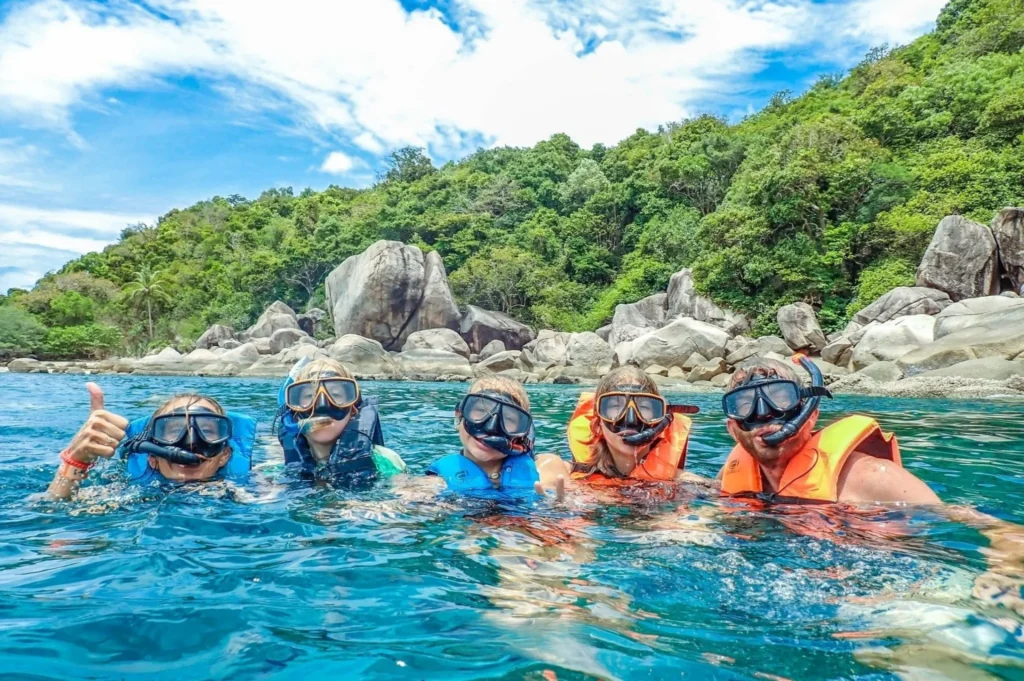
It’s shallow (2–4 metres) and sheltered. Life jackets are available, making it suitable and easy for non-strong swimmers.
Not really. Bleaching has left much of the centre of the bay as rubble, with healthier coral surviving along the eastern and rockier edges. Come for the sharks, turtles and fish, and see better reefs at the other stops on the loop.
Doing It as Part of the Day
Shark Bay is rarely visited alone, and it works best as one stop among several: a bay you snorkel for its animals, followed by others you snorkel for their reefs. That contrast is what makes the day, and it is why the standard Koh Tao loop is built the way it is.
Koh Nang Yuan and Koh Tao 5 Point Snorkeling Tour takes in Shark Bay along with Ao Leuk, Hin Wong, Mango Bay and Koh Nang Yuan, with the gear, the guide and lunch handled. Take the early departure and start at the bay while the sharks are still moving.