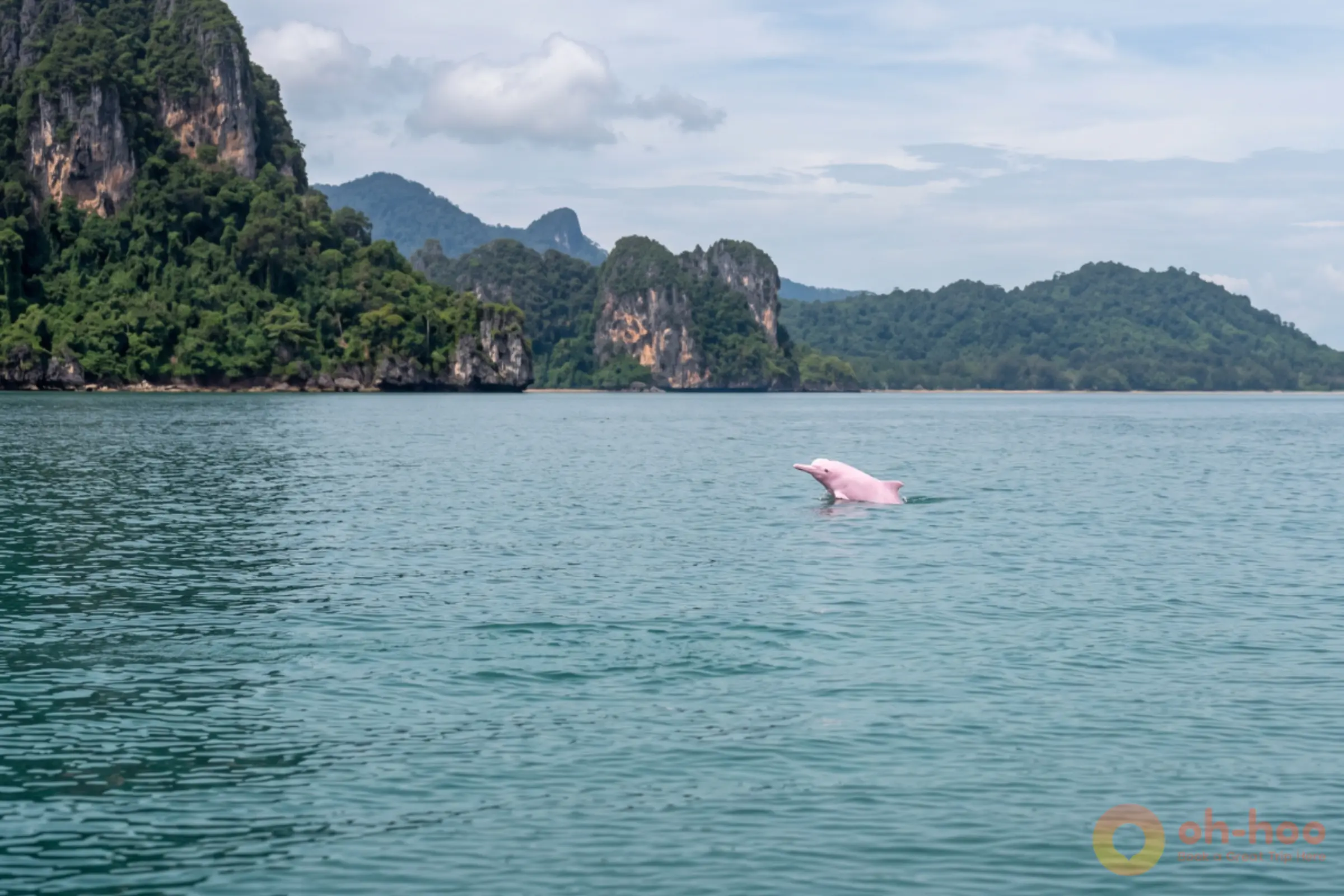
A grey dolphin surfacing beside a boat is a lovely thing. A pink one stops conversation entirely. The colour looks wrong in the best possible way: too soft, too artificial, closer to a bath toy than a wild animal, and the first question everyone asks, before the camera is even up, is whether it is real.
It is. The animal is an Indo-Pacific humpback dolphin, Sousa chinensis, and the small population that lives along the coast opposite Koh Samui is one of the few places in the world where you can reliably look for one. But the pink is not what most people assume. There is no pink pigment anywhere in that dolphin, it was not born that colour, and on a cool, quiet morning the same individual may not look pink at all.
The Science: Why the Pink Colour?
Three things combine to produce the effect: what the dolphin loses as it ages, what sits directly beneath the surface, and what the animal is doing at the moment you see it.
They Are Not Born Pink
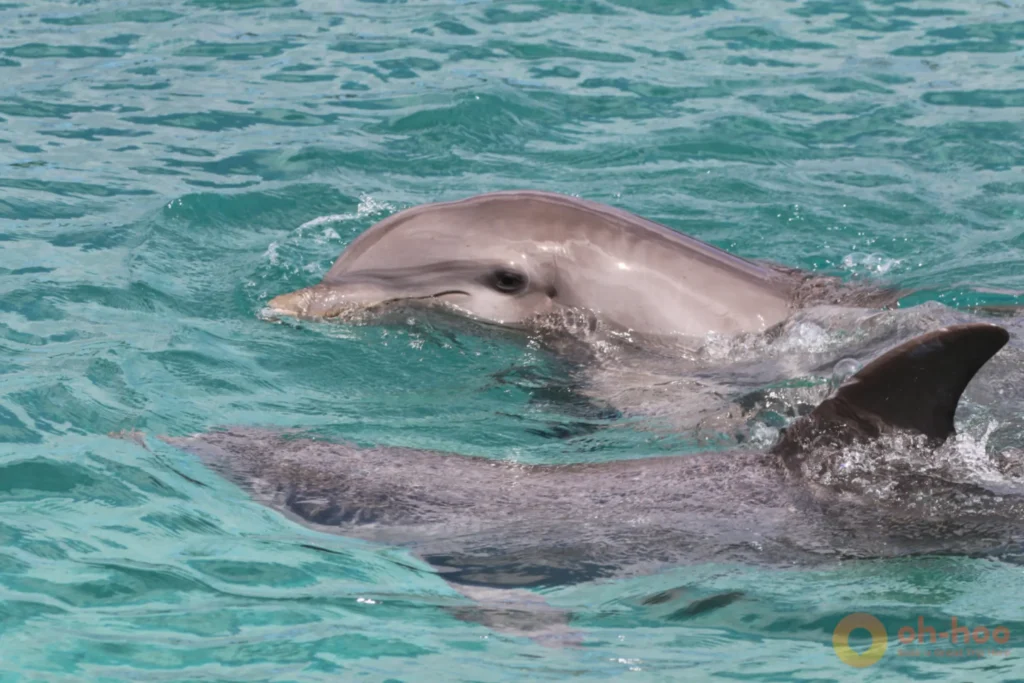
Spotting a dark, near-black dolphin swimming beside the pod signals a calf or juvenile in its first few years of life.
As time passes, that deep charcoal fades, giving way to a mottled coat of dark speckles across a steadily lightening background. This spotted pattern marks an energetic teenager in the mid-stage of growth.
Eventually, those freckles merge and vanish into a smooth, pale pink-and-white shade, revealing a fully mature adult. The brightest, almost seamless white individuals in the group are the oldest elders, having carried their story through decades at sea.
Their skin is a living timeline, letting the shifting spectrum of colors tell their age without relying on numbers.
It is a natural timeline written in skin and light—one best witnessed firsthand off the coast of Khanom.
The Colour Is Blood, Not Pigment
This is the part that surprises people. The pink does not come from anything pink. As the dark pigment in the skin fades, the skin becomes pale enough to be slightly translucent, and immediately beneath it lies a dense network of blood vessels running unusually close to the surface.
Those vessels are not there for show. They are a cooling system. A dolphin is a warm-blooded mammal wearing a layer of insulating blubber in water that sits near 30°C for much of the year, and shedding excess heat is a genuine physiological problem. Routing blood close to the skin lets the animal dump that heat into the sea. In a species pale enough to see through, the result is that its own circulation shows through the surface as pink.
Why the Same Dolphin Changes Colour
- Temperature & Exertion: The pink hue is caused by blood flow, not permanent skin pigmentation. High exertion (chasing fish, swimming fast) or warm water causes blood to rush to skin vessels, flushing the dolphin visibly pinker.
- Cooling & Rest: Resting in cooler water reduces surface blood flow, making the dolphin appear off-white or pale gray.
- Human Analogy: It works like a human flushing red during a workout the animal is simply making its circulatory system visible to regulate heat.
- Photo Variations: Unedited photos of the same dolphin taken hours apart can look drastically different depending on its activity level and water temperature.
Is It Albinism? And Is There a Pink Gene?
- Not Albinism: These dolphins aren’t albinos. They’re born dark gray and naturally shed melanin as they mature, a standard aging process across their entire population.
- No “Pink Gene”: There is no special pink gene or separate pink species. They simply flush pinkest in warmer, shallower waters like southern China and Thailand.
- One of a Kind: Just like human fingerprints, the unique spots and fin shapes on each dolphin let researchers—and careful observers—recognize individual members of the pod.
Now that we understand the science behind their signature pink color, the next question is clear: why has the mainland coastline just across from Koh Samui become one of the rare places in the world where you can actually spot them in person?
Where This Species Is Found
Indo-Pacific humpback dolphins inhabit shallow coastal waters across the eastern Indian and western Pacific Oceans, ranging from the Bay of Bengal to southern China. Rather than roaming far offshore, they stick close to estuaries, river mouths, and sheltered bays only a few metres deep.
In Thailand, the best-known population sits along the Khanom coast in Nakhon Si Thammarat, the stretch of mainland facing Koh Samui across the Gulf, between Nang Kham Bay and Thong Ching Bay. Research surveys there recorded animals in water as shallow as 1.1 metres and often within a few hundred metres of the beach, which is why this is a sighting you can genuinely look for from a small boat rather than a research vessel.
That proximity is the whole reason the trip works out of Samui. If you are planning around a sighting rather than the biology, the place to see Pink Dolphins covers the practical side, where the boats go and what a morning on the water actually looks like.

How Rare Is This Sighting Really?
Rare enough that the numbers are worth stating plainly. This is not a species with a large population and a lucky colour variant the whole species is small, coastal, and under pressure.
The Khanom Population
A photo-identification study running from July 2008 to June 2009 catalogued the dolphins along the Khanom coast individually and estimated the population at 49 animals – 33 adults, 8 juveniles and 8 calves. Local counts have put the figure a little above 50. Either way, the community you are looking for is smaller than the guest list at a wedding.
Why a Coastal Species Is a Fragile One
Living in shallow water beside people is what makes these dolphins visible and what makes them vulnerable. Their entire habitat overlaps with coastal development, fishing grounds, boat traffic, river runoff and pollution, and they cannot simply move offshore to avoid any of it. A species that lives fifty metres from the beach has nowhere else to be.
Set against that, a wild pink dolphin surfacing near your boat is not a standard holiday photograph. It is a look at a few dozen animals holding on in one bay.
FAQ
No. They are Indo-Pacific humpback dolphins (Sousa chinensis). Adults naturally lose their dark pigment over time, revealing the pink blood vessels underneath.
Age and activity level. Younger dolphins retain dark gray spots, while older ones fade to pale pink. Their color also flushes brighter when active or in warmer waters.
No. They are completely different species in different oceans, though both share a similar pink hue through surface blood vessels.
See One for Yourself
Seeing these unique creatures in the wild offers a perspective that no photograph can replicate.
The mainland waters off Khanom remain one of the few places on Earth to observe this rare population up close. Early morning boat trips depart directly from Samui to the Khanom coast, making a firsthand encounter both simple and unforgettable.
Ready to see them yourself? Book your Pink Dolphin Spotting tour today.