Best Snorkeling in Koh Lanta: Top Reefs & Morakot Cave Trip
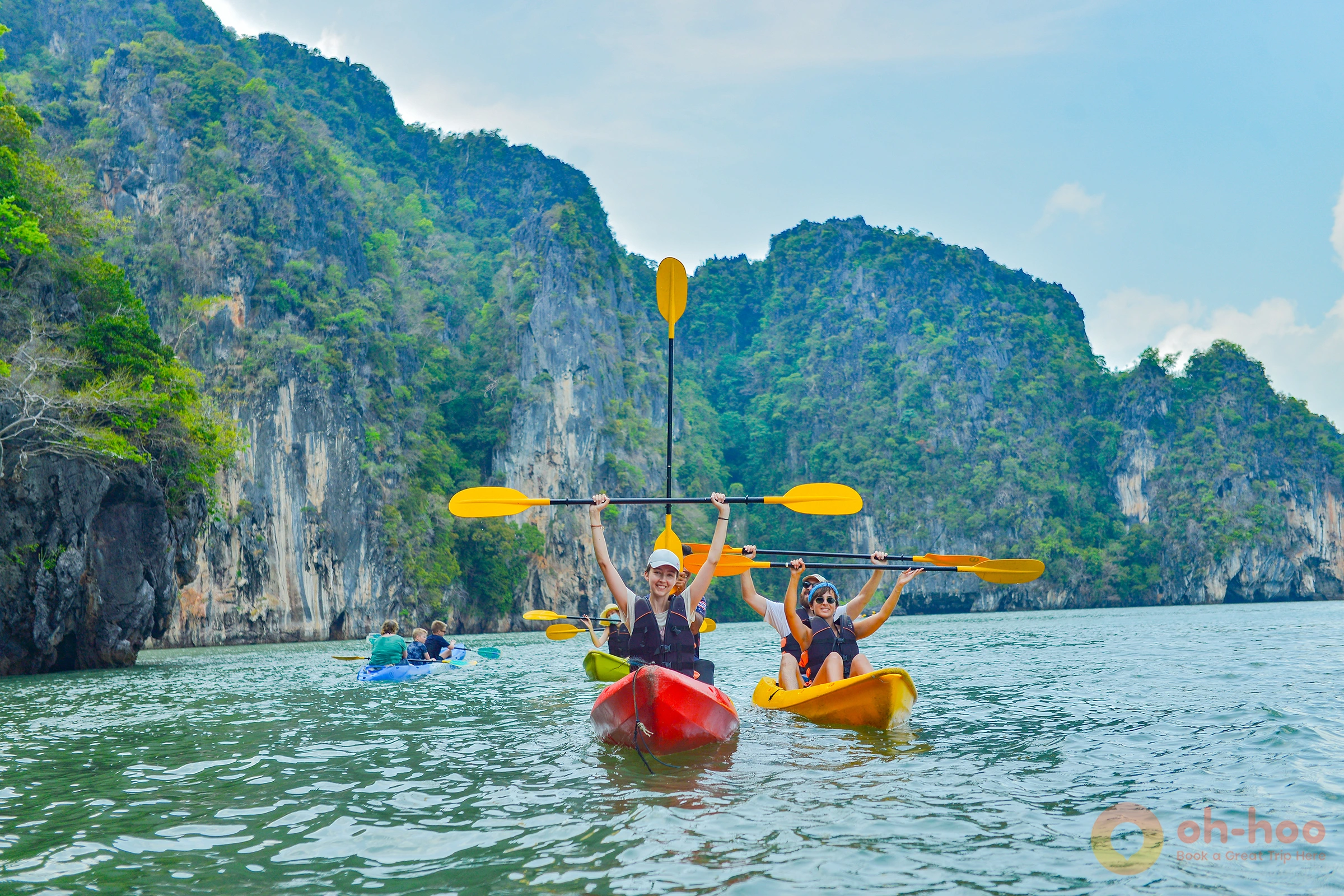
Koh Lanta is usually sold as a slow beach island, but the reason snorkellers keep coming back has nothing to do with the beaches. Lanta sits at the top of a chain running south into some of the clearest water in the Andaman, and almost every reef worth swimming on is within a morning’s boat ride – soft-coral gardens on the Trang islands, deep blue at Koh Haa, and the coral fields of Koh Rok, where you can see 30 metres on a good day.
This guide is about what is under the surface: the reefs worth your day, the Morakot Cave swim-in described from the water rather than the boat, the species you can realistically expect, and the months when visibility is on your side. For the hour-by-hour version of the boat day, see the full island-hopping itinerary. Ready to explore? Book your Koh Lanta island-hopping tour here.
Top Snorkeling Spots Around Koh Lanta
The spots split into two groups. The Trang-side islands – Koh Chuek, Koh Ma, Koh Ngai and Koh Mook – are shallow, sheltered and easy, and a classic Koh Lanta snorkeling tour strings them together in one day. The park islands further out, Koh Haa and Koh Rok, are deeper and clearer, and get their own trip.
Koh Chuek – Soft Coral and Clownfish in the Shallows
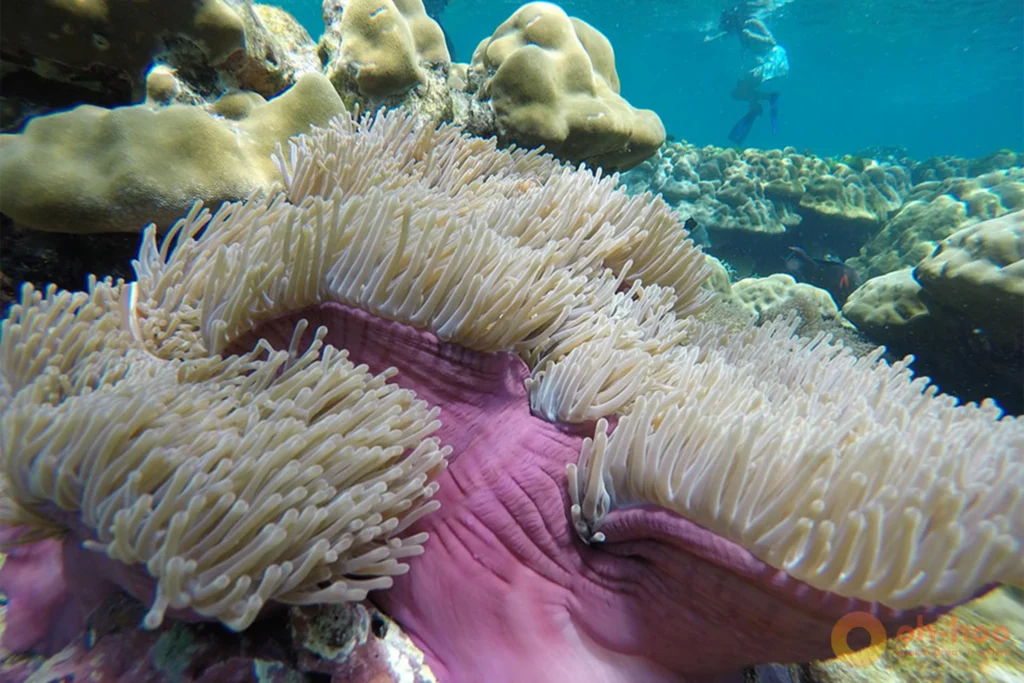
Koh Chuek is a limestone stack with no beach, so the whole stop happens in the water. You drop in beside the rock face and follow a shelf of soft corals and sea fans, with anemones and their resident clownfish sitting only two or three metres down. Because the reef starts right at the surface, this is often the easiest spot on the route to see things without diving down, depending on the daily water conditions and clarity, and where most people get their best photos.
Koh Ma – A Quick, Clear-Water Reef Stop
Small, quiet and often skipped by bigger boats, Koh Ma is a stop longtail can reach because they draw so little water. The reef is hard coral heads and sand in three to six metres, so fish stand out against the pale bottom – parrotfish grazing audibly on the coral, wrasse, damsels, and the occasional ray lifting off the sand.
Koh Ngai – Coral Garden Off the Beach
Koh Ngai is your designated lunch stop and the longest break of the day. After enjoying an authentic Thai meal on the white sand, you will have plenty of free time to sunbathe or take a dip in the shallow, clear waters right off the beach. While the beach area can get lively with visiting boats, its glassy shallows offer a highly accessible spot to cool off and relax before heading to your next snorkeling destination.
Koh Haa – The Clearest Water & A Calm Sheltered Lagoon
Five limestone islands about 25 km southwest of Lanta, and where the water goes properly blue – visibility regularly runs 20-30 metres in the dry months. The sheltered inner lagoon is calm enough for beginners, while the outer walls drop into deep water where barracuda and fusiliers school. It is a separate speedboat day, not part of the 4-island route.
Koh Rok Nai & Koh Rok Nok – The Best Coral Gardens
The twin Rok islands sit around 45 km south of Lanta inside Mu Ko Lanta National Park, split by a shallow channel carpeted in staghorn and table coral. Protection has kept this reef in better shape than most of the Andaman, and there is a chance to spot green and hawksbill turtles over the seagrass.
Check the closure dates below before planning around it.
Morakot (Emerald) Cave: The Underwater Swim-In
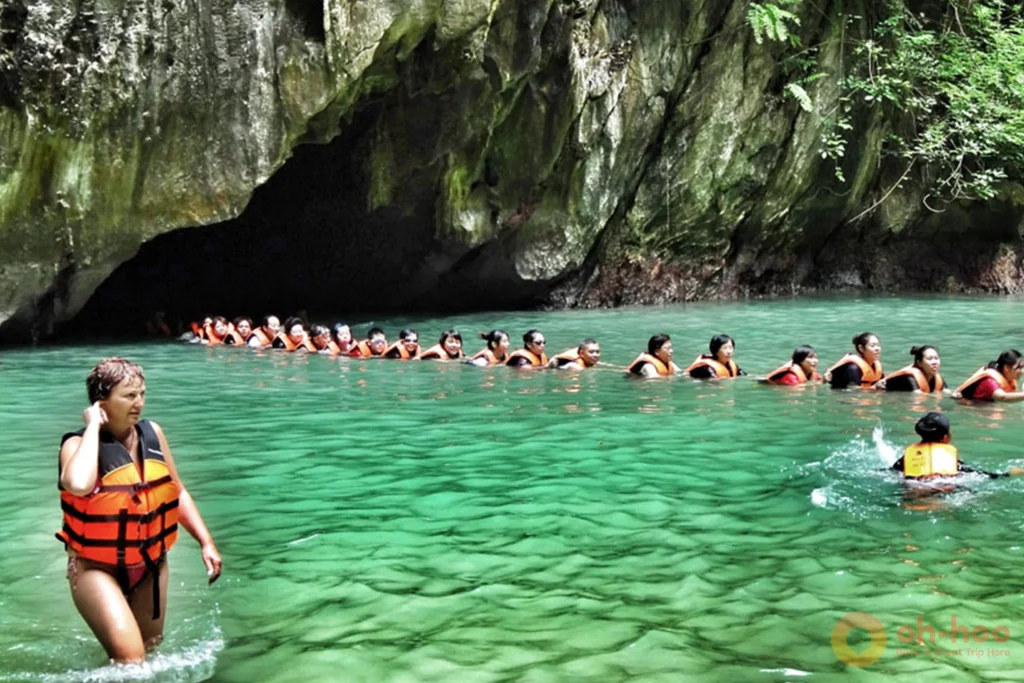
Morakot Cave on Koh Mook is the most talked-about swim in the region, and it helps to know what it actually is. The entrance is a low opening at the waterline – from a few metres away, you would not know it was there. You go in wearing a life jacket behind a guide with a torch, and for roughly 80 metres the tunnel bends into complete darkness before opening onto a hidden beach ringed by jungle cliffs.
The snorkelling happens at the mouth, not inside. Fish gather in the sunlit water at the entrance, and the last few metres before the tunnel are worth swimming facedown: light bouncing off the pale sand bottom is what gives the water its emerald colour. Inside there is nothing to see – a dark swim through cool, deep water with rock close on both sides. The reward is the lagoon at the far end, not a reef.
Everyone wears a life jacket and moves as a group, making it accessible for non-swimmers, though it ultimately depends on personal confidence levels. Comfort with darkness matters far more than swimming ability here.
What You’ll See
Andaman reef life is dense rather than dramatic. On a typical day, expect:
- Clownfish and anemonefish – frequently spotted at Koh Chuek and Koh Ngai, within snorkelling depth
- Parrotfish, angelfish and butterflyfish – the colourful regulars, usually in the first few metres
- Green and hawksbill turtles – often seen at Koh Rok, feeding on seagrass and coral
- Blue-spotted ribbontail rays – resting on sandy patches, easy to miss until they move
- Blacktip reef sharks – small, shy juveniles in the shallows; non-aggressive, and a good sighting
- Staghorn, table and brain coral, soft corals and giant clams on the healthier reefs
Manta rays and whale sharks do pass through, but almost always at Hin Daeng and Hin Muang – deep offshore pinnacles that are scuba sites, not snorkelling stops.
Water Visibility & Best Season
The Andaman runs on the monsoon, and it shows in the water more than in the sky
- Nov-Apr (High Season): Flat seas and clear blue water. Visibility reaches 20-30m at Koh Haa and Koh Rok (Jan-Apr is peak).
- May-Oct (Monsoon Season): Plankton and swells reduce clarity; visibility becomes unpredictable.
- Pro Tip: Go early in the morning for calmer water, better light, and fewer boats.
What to Bring for Snorkeling
- Well-fitting Mask: Boats provide basic gear, but bringing your own mask ensures a perfect, comfortable fit without leaks.
- Sun Protection: A rash guard offers the best defense while floating face-down for hours, paired with reef-safe sunscreen for any exposed skin.
- Dry Bag: Essential for keeping your phone, camera, and dry clothes safe from splashes on the boat.
- Towel: Crucial for drying off and warming up quickly after you get out of the water.
- Cash: For the national park fee (usually 200 THB/adult, 100 THB/child) just in case it is not included in your tour price.
FAQ
No. Life jackets are provided, and the main reef stops are shallow and sheltered. If you can float and breathe through a snorkel, you can do the day – tell your guide if you are not confident, and they will keep you near the boat.
A mask and life jacket are standard on almost every trip, including the longtail 4- island tour. Fins are less reliably provided, so bring your own if you want them, and underwater cameras are not included.
Can you snorkel inside the Emerald Cave?
Not really – the tunnel is dark, and there is no coral in it. The worthwhile snorkelling is at the entrance and just outside, where fish gather in the light. Keep your mask on for the approach, then swim the tunnel.
Koh Rok and Koh Haa have the better coral and clearer water, but they are a longer speedboat day, and they close in the monsoon. The 4-island longtail trip has gentler reefs plus the Emerald Cave, and it is the better first day out. Keen snorkellers do both.
Book Your Koh Lanta Snorkelling Day
For the reefs and the cave in one unhurried day, the classic longtail route is the one to take – shallow coral at Koh Chuek and Koh Ngai, a clear-water stop at Koh Ma, and the swim into Morakot Cave in the middle. Book the Lanta 4 Island Tour & Morakot Cave Snorkeling by Classic Longtail to experience vibrant reefs, crystal-clear waters, and the hidden wonder of the Emerald Cave all in one perfect, unhurried day.