Doi Inthanon Weather & What to Pack for Thailand’s Highest Peak
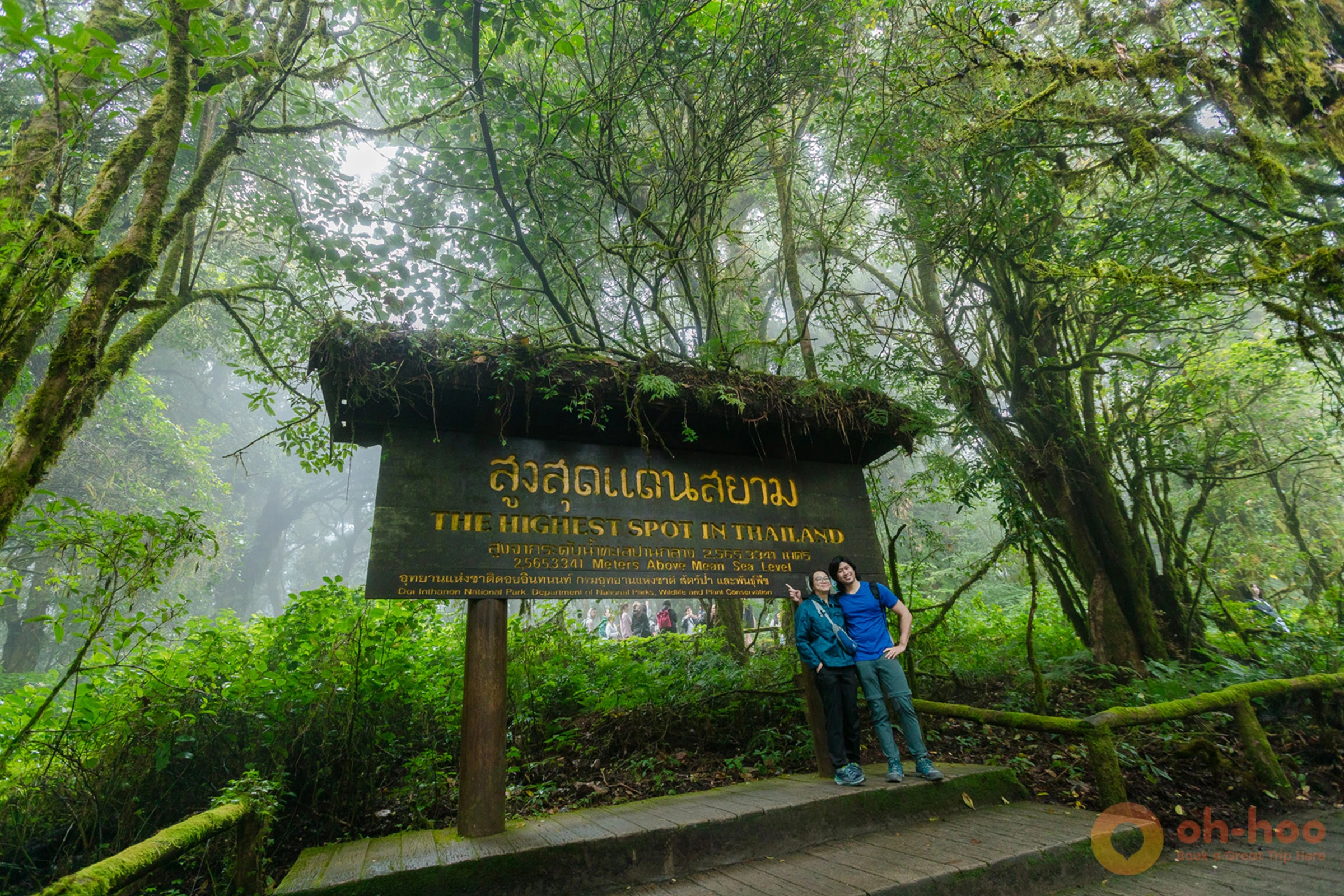
The most common mistake on a Doi Inthanon tour is packing for Chiang Mai. You leave the city in a t-shirt at 30°C, and two hours later you are standing at 2,565 metres in cloud, wind, and much cooler temperatures, sometimes even single digits, wondering why everyone else brought a jacket. The mountain does not care what season it is down in the valley.
Preparing for this is simple once you know what to pack; it all comes down to bringing the right layers. Here is how the temperature actually behaves between the park gate and the summit, what to wear in each season, and a packing list you can work through the night before.
How the Weather Changes From Base to Summit
As a general pattern, temperatures drop roughly 1°C for every 150–200 metres of elevation gained as you ascend Doi Inthanon from its 300-metre base to the 2,565-metre summit. While conditions fluctuate daily and seasonally, the higher elevations generally run 10–15°C cooler than Chiang Mai, making the summit noticeably chillier year-round.
| Where you are | Roughly | What it feels like |
| Park gate & lower waterfalls | 300-800 m | Warm and humid; Chiang Mai weather |
| Twin pagodas & midmountain | 1,700-2,200 m | Fresh and breezy; a light layer is enough |
| Summit & Kew Mae Pan ridge | 2,200-2,565 m | 10-15°C cooler than the city, often windy and in cloud |
Two things surprise first-timers. The first is wind: the summit and the exposed ridge viewpoints are frequently blowing, and moving air at 12°C feels a lot colder than still air at 12°C. The second is water – the summit sits in cloud forest, so mist, drizzle and dripping trees are normal even on a “clear” day, and the spray zone below Wachirathan Waterfall will soak you at any time of year.
Because a typical day starts low, climbs to the top mid-morning and comes back down, you want layers you can add and shed rather than one heavy coat.
What to Wear by Season
While the mountain is cooler year-round, each season brings its own specific conditions. Here is how to dress accordingly.
Cool Season (November – February)
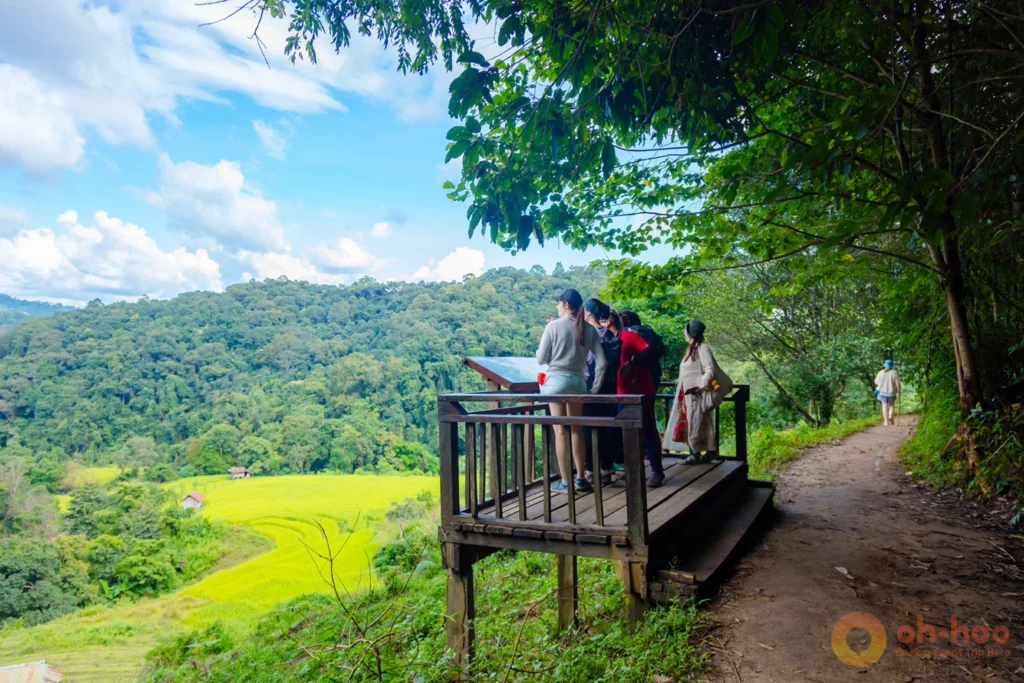
Peak season hits between November and February, but many visitors still pack too light. Temperatures at the summit stay around 6–10°C and can easily dip to 0–5°C early in the morning, making December and January cold enough for frost. Wear a t-shirt, a fleece or hoodie, and a windproof outer jacket, with long trousers rather than shorts. A beanie and light gloves are not overkill for a sunrise start – your hands are the first thing to complain.
Hot Season (March – May)
Down in Chiang Mai it can be 38-40°C. On the summit it is usually a pleasant 15-22°C, which is exactly why the mountain is such a good escape in April. Dress for the city in breathable clothes, but carry a light fleece or long-sleeve layer for both warmth and essential UV protection against the strong altitude sun.
Agricultural burning in March and April can cause heavy air pollution and haze across northern Thailand. Be sure to check daily air quality reports (AQI) and local news before setting out on high-pollution days, outdoor activities and trail hikes may be restricted or advised against for health and safety.
Rainy Season (June – October)
Green, dramatic and much quieter, with the waterfalls at full power. Expect afternoon downpours, thick clouds around the summit, and permanently damp ground. Quick-dry clothing beats cotton, which stays wet and cold for hours. Bring a proper rain jacket rather than an umbrella – it is windy up there – and pack a full change of clothes in the van. Note that the Kew Mae Pan trail is closed from June to October, reopening on 1 November
Footwear & Rain Gear
Proper footwear and rain protection are non-negotiable for safely navigating the mountain’s wet and uneven terrain.
- Closed-toe shoes: Required by tour operators; flip-flops are not allowed on wet boardwalks and steps.
- Hiking shoes or trail runners: Recommended for Kew Mae Pan or Pha Dok Siew trails due to muddy steps and roots.
- Socks: Wear wool or synthetic socks, and pack a spare pair in case your feet get wet.
- Rain jacket: Bring a packable, hooded rain jacket—summit mist occurs year-round.
- Poncho: Ideal for visiting Wachirathan Waterfall to block heavy spray.
- Dry bags: Keep your phone, camera, and cash protected from drizzle and mist.
Essentials for Viewpoints, Trails & Waterfalls
Different locations on the mountain require slightly different preparations. Here is what to focus on for each key stop.
Summit & Viewpoints
The summit walk itself is short and paved, so the priority is warmth and wind protection rather than gear: outer jacket, hat, and a camera you can operate without taking your gloves off. Lens cloths are worth carrying – a cold lens fogs the moment you step out of a warm van. If you are chasing the sea of mist, get to the viewpoints early; it usually burns off by mid-morning.
Nature Trails
The Ang Ka boardwalk near the summit is a 15-20 minute loop and needs nothing special.
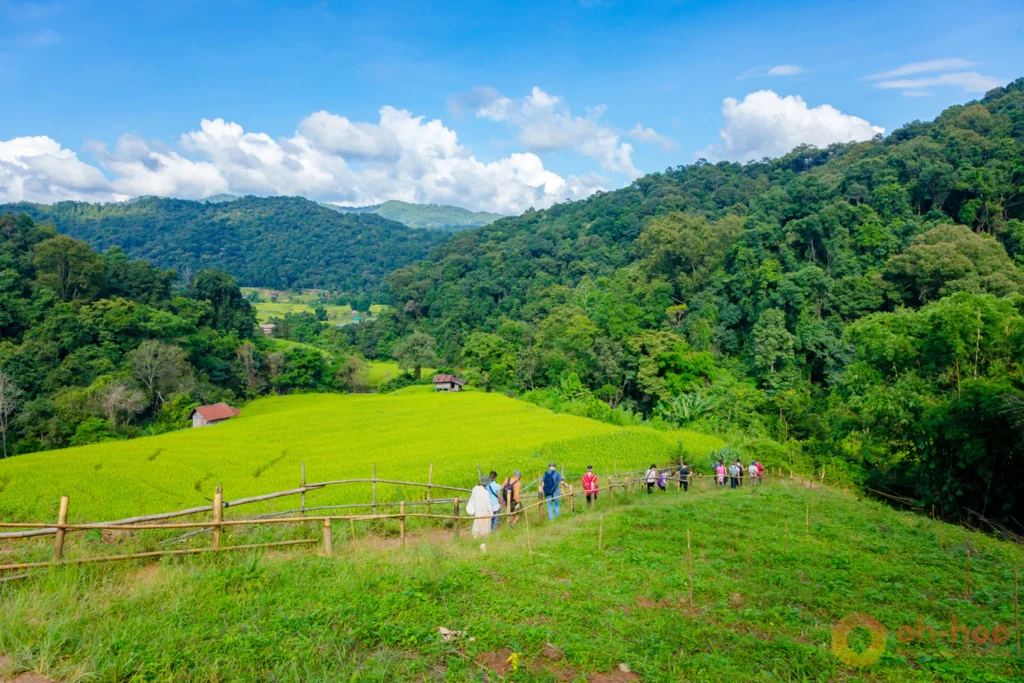
Kew Mae Pan is a 2.5 km ridge loop that requires a local guide (a small fee per group, arranged at the trailhead) and is open 1 November to 31 May only.
Pha Dok Siew is the longer, greener option through Karen farmland and forest – two to three hours with steps and uneven surfaces, best done with a guide who knows the route. If a proper walk is the point of your day rather than a bonus, the Doi Inthanon Nature Trail & Pha Dok Siew Day Tour is built around the trail instead of squeezing it between stops.
Waterfalls
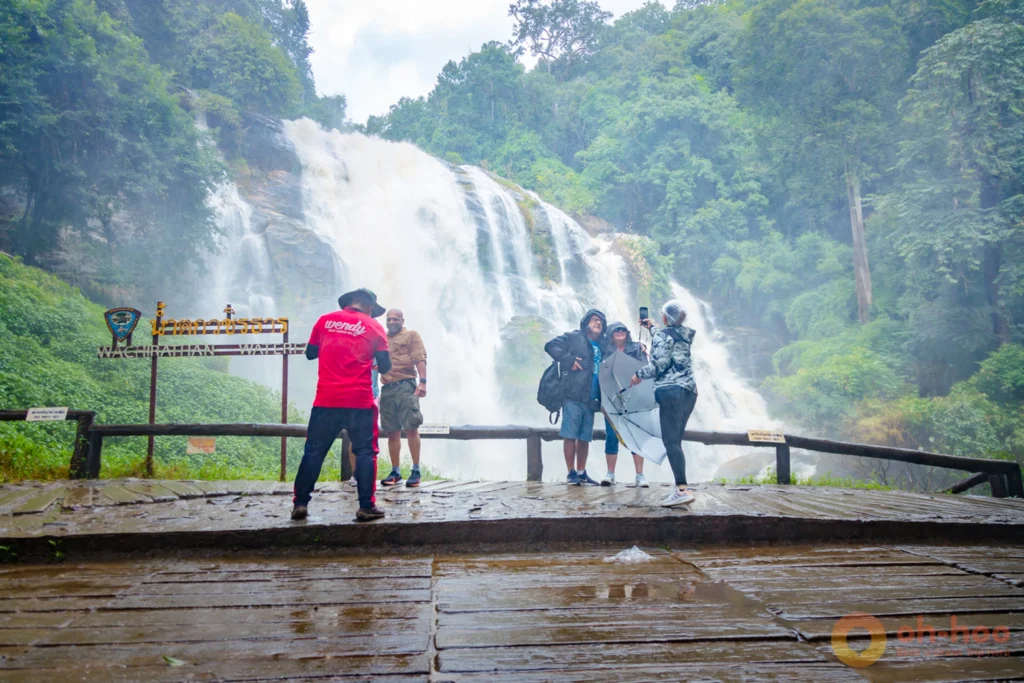
Wachirathan is the loud one – a wall of spray reaches the viewing platform, so assume you and your camera will get wet. Mae Klang and Sirithan are gentler and easier to photograph. The rocks around all of them are slippery, so this is where footwear earns its place. A quick-dry towel in the van is a small thing that makes the rest of the day much more comfortable.
Sample Packing List
Wear on the day: t-shirt, fleece or hoodie, windproof jacket, long trousers, closed-toe shoes with grip, socks you do not mind getting wet.
In the daypack:
- Rain jacket or poncho, packed small
- Beanie and light gloves (November to February, or any sunrise start)
- Quick-dry towel and a spare pair of socks
- Sunscreen, sunglasses and a cap – altitude sun is stronger than it feels. Insect repellent for the trails and village stops
- Refillable water bottle and a snack
- Power bank; cold drains phone batteries faster than you expect
- Cash for the national park fee (300 THB per adult, 150 THB per child) and the twin pagodas (100 THB per adult, 50 THB per child), which most tours do not include
- Modest layers for the pagodas – covered shoulders and long trousers or a skirt below the knee
FAQ
To make your preparation as smooth as possible, use this checklist to ensure you have all the essentials before you go.
Daytime summit temperatures usually sit between 10°C and 15°C. In December and January, dawn readings of 0-5°C are normal, and frost appears on the ground at the ridge viewpoints most years. Snow does not fall here, but hail and sleet occasionally do, and it gets properly cold by Thai standards.
A light one, yes. Even in April, when Chiang Mai is close to 40°C, the summit is typically 15-22°C and breezy. A thin fleece or long-sleeve layer is enough for the breeze, doubles as essential UV protection against the strong mountain sun, and you will be glad of it in the van as well.
Sneakers or trainers at minimum – most operators require closed-toe shoes and will turn away flip-flops. If you plan to hike Kew Mae Pan or Pha Dok Siew, wear shoes with proper grip; the trails are stepped, rooty and often damp.
Yes, with adjusted expectations. The forest is at its greenest, and the waterfalls are at their strongest, but the summit is often inside clouds and long views are hit and miss. Remember that Kew Mae Pan is closed from June through October.
For the royal twin pagodas, yes – covered shoulders and legs, no tank tops or short shorts. Long trousers and a t-shirt cover you for the whole day and keep you warm at the top, so it is the easiest default.
Book Your Doi Inthanon Day
Pack layers, wear shoes you can climb wet steps in, and the mountain does the rest – summit cloud forest, twin pagodas, Karen villages and waterfalls in a single day out of Chiang Mai. Book the One Day Tour Doi Inthanon National Park From Chiang Mai and let the driver handle the 2,565 metres.