Similan Islands Day Trip: Best Snorkeling Tour From Phuket & Khao Lak
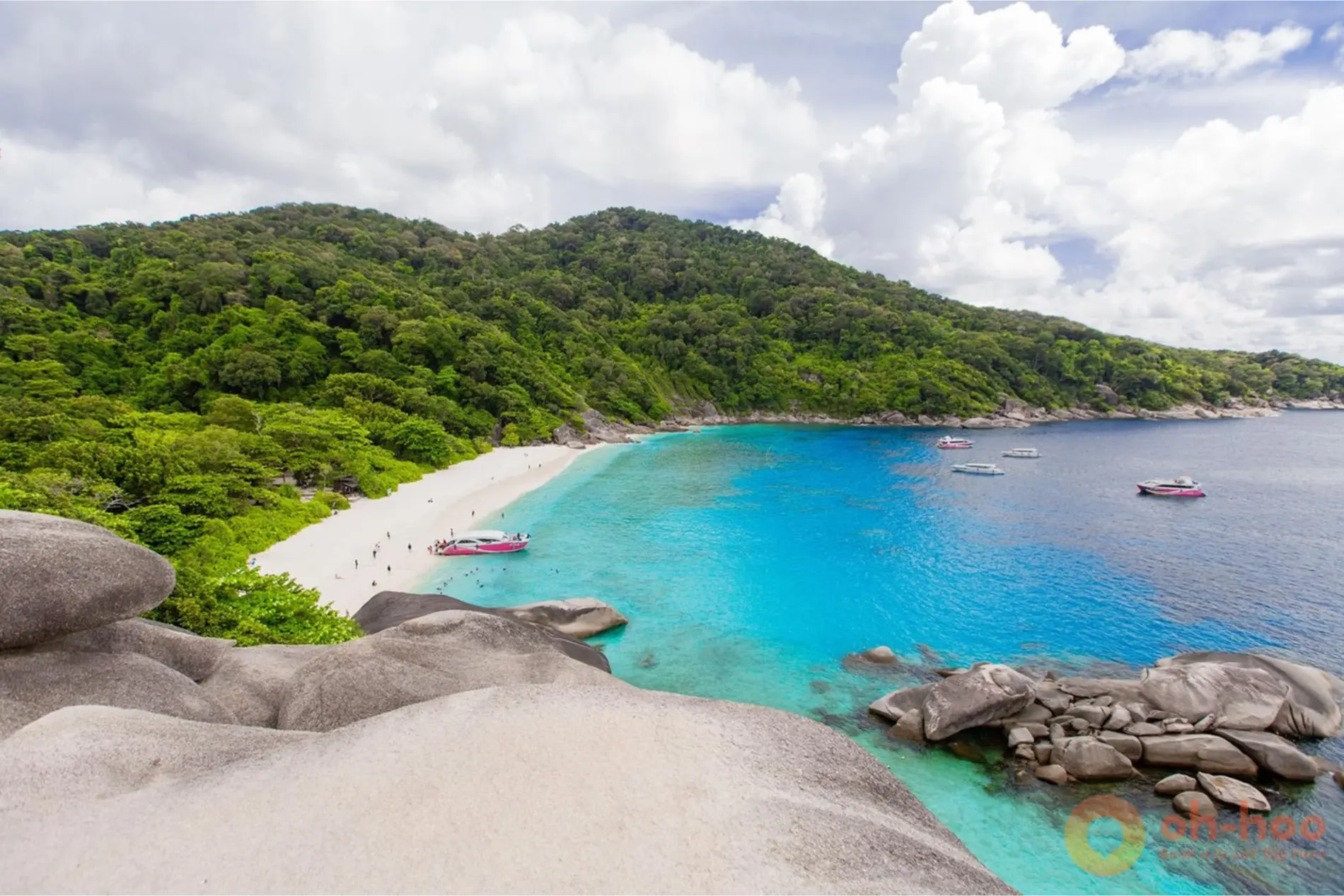
There’s a moment early into a Similan Islands day trip when the mask comes down, the face goes under, and the surface world evaporates. Below: house-sized granite boulders tumbled across white sand, hard coral gardens no more than four metres beneath your fins, and reef fish moving in schools thick enough to change the light. This isn’t scenery you photograph and move on from. It’s the reason divers put the Similans on career shortlists and casual snorkellers come home saying they never knew Thailand looked like this.
Before you plan a Similan Islands tour, though, it’s worth noting that the “Similans” are actually a striking archipelago of eleven islands located in the Andaman Sea, offshore from Phang Nga Province. The entire area is protected as the Mu Ko Similan National Park (Similan Islands National Park), managed directly by the Department of National Parks, Wildlife and Plant Conservation. While the islands are numbered, the absolute highlight of any trip is Ko Similan (Island No. 8), home to the iconic Sail Rock and the largest island in the chain. Another important thing to know upfront: the park closes for half the year. This guide walks through the underwater experience, the above-water views, when you can go, and how to make the day count.
What Snorkeling at the Similan Islands Actually Feels Like
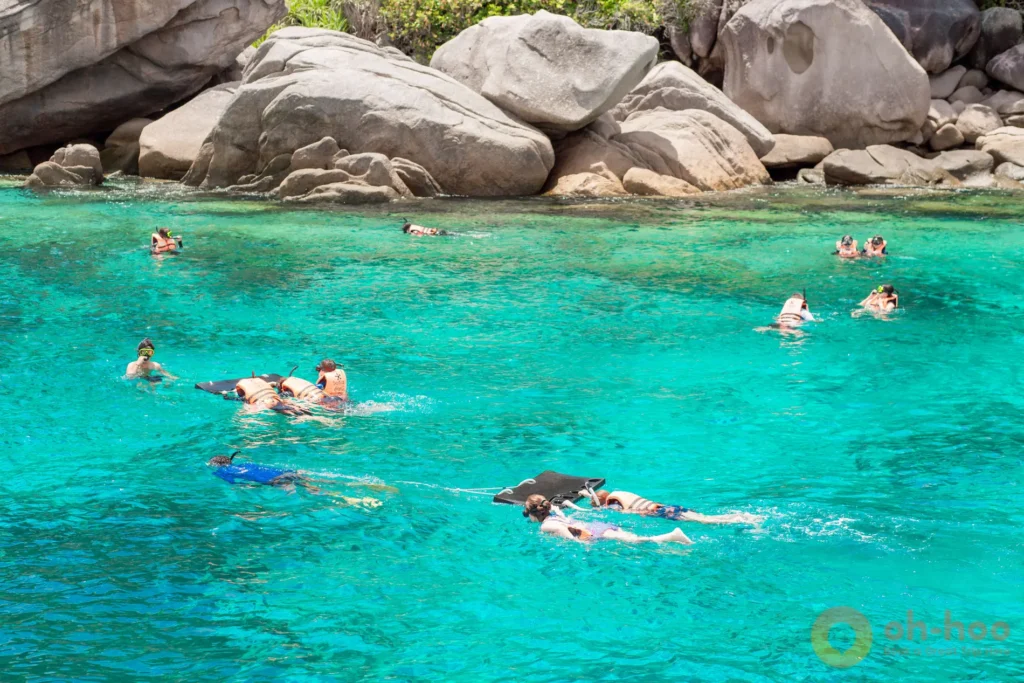
Two things surprise first-time snorkellers here. The first is visibility. On a normal day in the open season, the water runs 20 to 30 metres clear. You can float above a coral head and see the sand floor and the horizon at the same time. Comparable Andaman snorkel spots deliver 8 to 15 metres. The Similans are in a different league.
The second is the reef structure. Most Thai snorkelling happens over coral only. The Similans stack coral gardens on top of the granite boulders the islands are built from, round, house-sized, tumbled into cathedrals of swim-throughs and shaded lanes. Fish use the geometry. You’ll drift over a boulder rim and drop into a bowl-shaped clearing with a hundred butterflyfish moving in one direction and a wrasse the length of your forearm crossing the other way.
The signature encounters take patience but pay off. Schools of bumphead parrotfish bulldoze the reef, sometimes twenty strong, and cruise the deeper edges. Whitetip reef sharks nap under overhangs. Hawksbill turtles are a common sight here, regularly spotted working the coral for sponges. Nothing is guaranteed on any single day. Almost everything is possible almost every day.
The Snorkel Sites – Each One Has Its Own Personality
The unique underwater scenery of the Similan Islands isn’t a coincidence, it’s the direct result of a fascinating geological history. Unlike most of Thailand’s limestone islands, the Similans were formed by massive granite intrusions pushed up from the ocean floor millions of years ago. Over millennia, powerful monsoon waves eroded these granite mountains, creating dramatic landscapes above water and shaping completely different underwater environments on each side of the archipelago.
Because of this distinct geography, every snorkel site has developed its own striking personality and structure:
Christmas Point
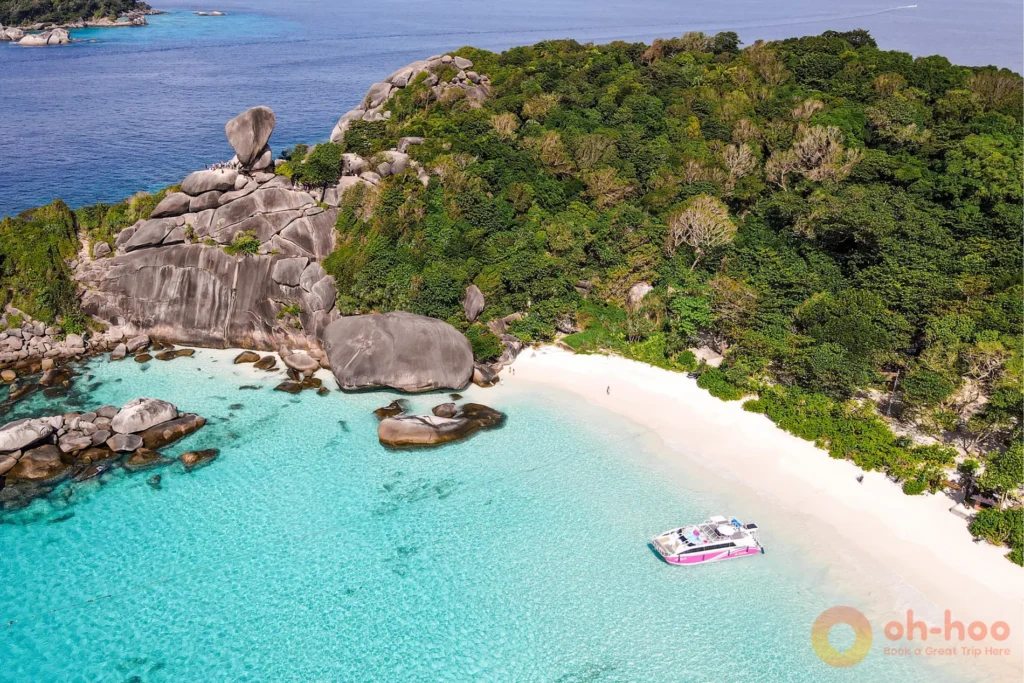
The most photographed underwater site in the park, and for once, the reputation earns it. Located on the exposed western side of the islands, the heavy sea currents have washed away all fine sediment, leaving a spectacular labyrinth of massive, tumbled granite boulders. These giant stones create a natural obstacle course of swim-throughs, sunlit chambers, and narrow channels where reef fish gather thickly. Depth stays snorkel-friendly (2 to 6 metres over most of it), currents are usually gentle, and the light coming through the boulders at mid-morning is what people mean when they say cathedral. This is the site to make sure your tour includes.
Beacon Reef
In contrast to the rocky west, this site sits on the sheltered eastern side of the islands, protected from harsh open-ocean waves. Without the turbulent water, a long, gradually sloping hard coral garden has formed parallel to the shore, running along a gentle sandy slope. It is the closest thing the Similans have to a Great Barrier Reef feeling, featuring massive plate corals, thick fields of staghorn, and dense fish traffic across the shallows. It is best in flat conditions when the surface is glass, and the reef reads like a lit aquarium.
Donald Duck Bay (Ao Kuerk)
The sheltered horseshoe bay that every tour uses for lunch and a swim stop. The unique curve of the island’s granite coastline naturally blocks strong open-sea currents, trapping fine, powder-white sand made from crushed coral over centuries. The water here is shallow, the sand is powdery, and the far side of the bay has enough coral for beginner snorkellers to explore without heading into deeper water. If you have a nervous swimmer in your group, this is the site that seals the day, and if you don’t, it’s still where you’ll come up for air between the deeper stops.
The Above-Water Views People Come Back For
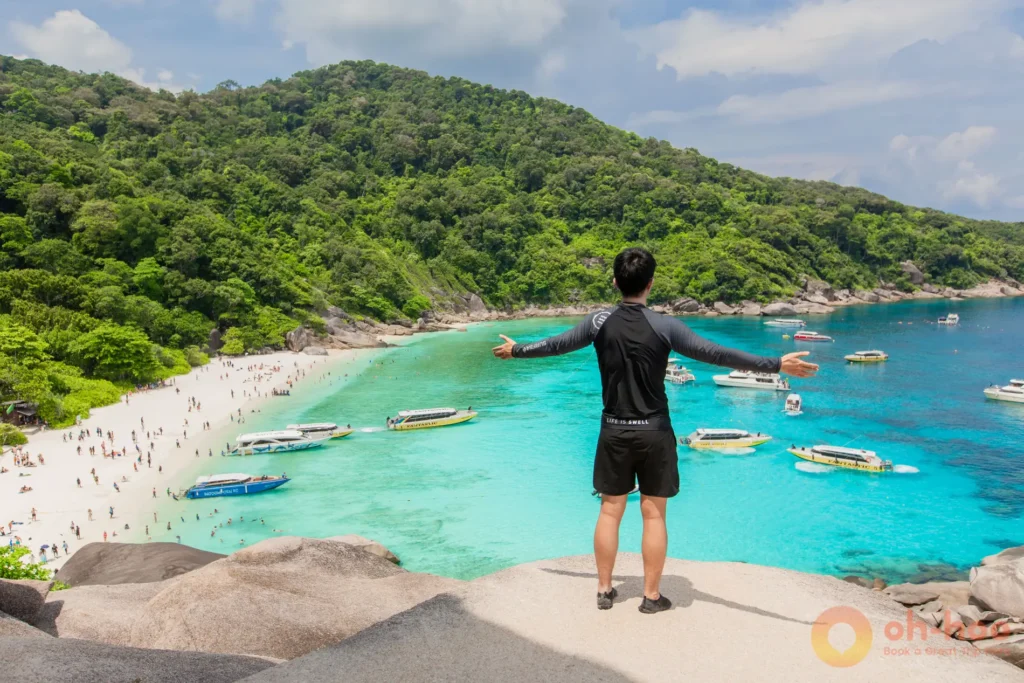
The underwater story is what sells a Similan Islands snorkeling tour, but the above-water views are the reason people book their second trip.
Sail Rock Viewpoint
A steep 15-minute climb through jungle scrub ends at a granite outcrop shaped exactly like its name. From the top, the southern archipelago spreads out below: Donald Duck Bay directly beneath your feet, boulder-strewn beaches ringing the coastline, and the deep blue of the open sea running to the horizon. The photograph you’ve seen of the Similans on every travel account is taken from here, the boulder-and-turquoise combination you can’t find on Phi Phi, Koh Lipe, or anywhere else in Thai waters. Wear proper shoes; the trail is short but hot in midday sun.
When Are the Similan Islands Open?
| Seasonal closure: The Similan Islands National Park is closed to visitors every year from around mid-May to mid-October (approximately 16 May – 15 October). No day trips run during this window from either Phuket or Khao Lak. |
The closure is a Department of National Parks policy that gives the reef and beaches a monsoon-season break for ecological recovery. It applies to every operator on the coast, so if a company claims to run a Similan Islands tour in July or August, that’s a red flag worth walking away from. Open season runs roughly from mid-October through mid-May. Sea state and visibility peak between December and March, the flat-water, cathedral-light conditions the underwater sites are famous for. Peak dates sell out weeks in advance because the park caps daily visitor numbers to protect the reef. Book earlier for December and January.
Similan Islands from Phuket vs. from Khao Lak
Two departure points, and the choice is straightforward once you know where you’re based.
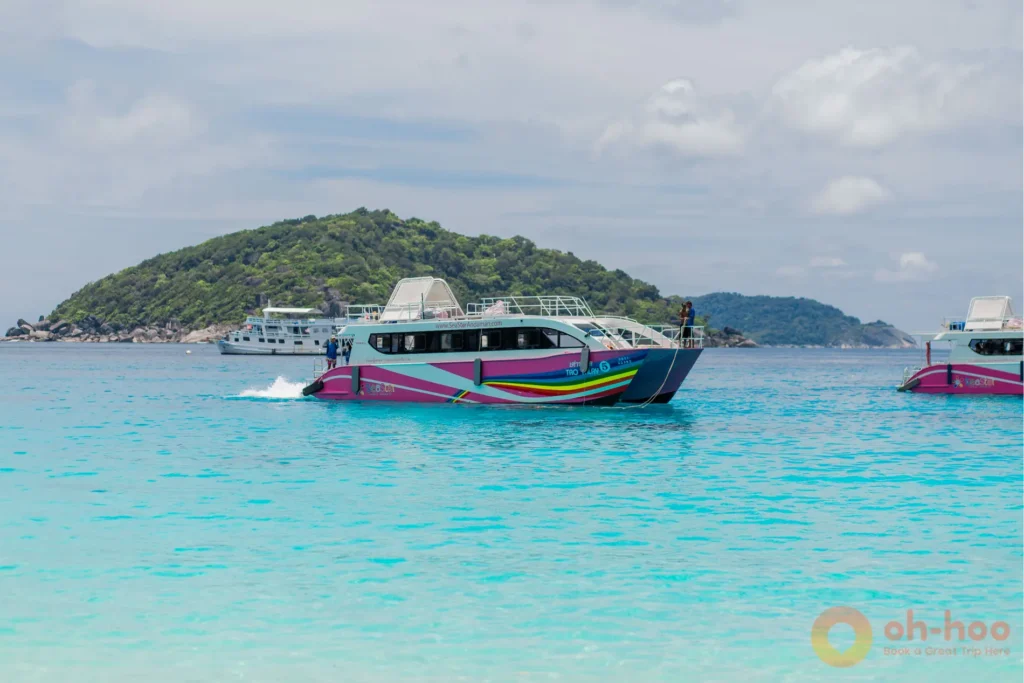
- Khao Lak (Thap Lamu Pier) is closer to the archipelago, about 1.5 hours by speedboat. If you’re already in Khao Lak or northern Phang Nga, a Khao Lak Similan Islands tour is the natural choice: shorter transfer, earlier arrival at the sites, back at the pier by mid-afternoon.
- Phuket departures add a road transfer of 1.5 to 2 hours up to Thap Lamu before you board; most Phuket-branded tours actually depart from the same pier. That makes the total door-to-door day 12 to 13 hours, but pickup logistics are handled, and you don’t have to reposition to Khao Lak the night before.
What to Bring
Four things are non-negotiable. Everything else is comfortable.
- Reef-safe sunscreen (mineral / zinc-based only). Thailand bans oxybenzone and octinoxate in marine national parks; non-compliant bottles get confiscated at the checkpoint.
- Rash guard or long-sleeve swim top. The equatorial sun on open water burns through cloud cover, and it doubles as light jellyfish protection on unlucky days.
- Cash for the park fee. Around 500 THB per foreign adult, paid separately at the pier and not included in the tour price. Confirm the exact figure with your operator before departure.
- Motion-sickness tablets if you’re prone. The outbound leg can be bumpy on windier days. Also useful: swimwear worn under your clothes for a fast morning start, a light towel, a waterproof phone pouch, and a dry change of clothes for the ride home.
- Polarized sunglasses. The glare off the turquoise water can be incredibly intense, especially during the speedboat ride. A good pair of polarized sunglasses will protect your eyes and help you see the coral reefs clearly through the water.
FAQ
December to March. The sea is calmest, visibility is at its peak, and the weather is reliably dry. October, November, April, and early May are still good but slightly less settled.
No. The park closes annually from around mid-May to mid-October for monsoon-season ecological recovery. No tour operates during that window from any pier.
For pure snorkeling quality, most travellers say yes. The Similans have better visibility, healthier coral, and fewer boats on the water thanks to the park’s daily visitor caps. Phi Phi is closer, easier, and more famous for its scenery above water; Similan is where you go for what’s below it.
Almost every Phuket-based tour includes hotel pickup and a road transfer of 1.5 to 2 hours up to Thap Lamu Pier in Phang Nga, followed by a 1.5-hour speedboat ride to the first island. Total travel time each way is around 3 to 3.5 hours, but the payoff is worth it.
Plan Your Similan Islands Day Trip
The Similans reward travellers who plan around the season and show up ready to be in the water. Cathedral light through the boulders at Christmas Point, a bumphead school cruising past Beacon Reef, the view from Sail Rock at midday, these are the moments a good Similan Islands tour is built around.
Ready to lock in a date within the open window? Book the Similan Islands snorkeling day trip with Oh-hoo Travel hotel pickup from Phuket, speedboat transfer from Thap Lamu, the archipelago’s best snorkeling stops, Donald Duck Bay, and the Sail Rock viewpoint all in one full day. Prefer departing from Khao Lak instead? Our Khao Lak departure runs the same itinerary with a shorter transfer for anyone already up the coast. Either way, a day on the Similans is one of the best water days you can have in Thailand.