White Temple Chiang Rai: Best Full-Day Tour to Wat Rong Khun & Black House
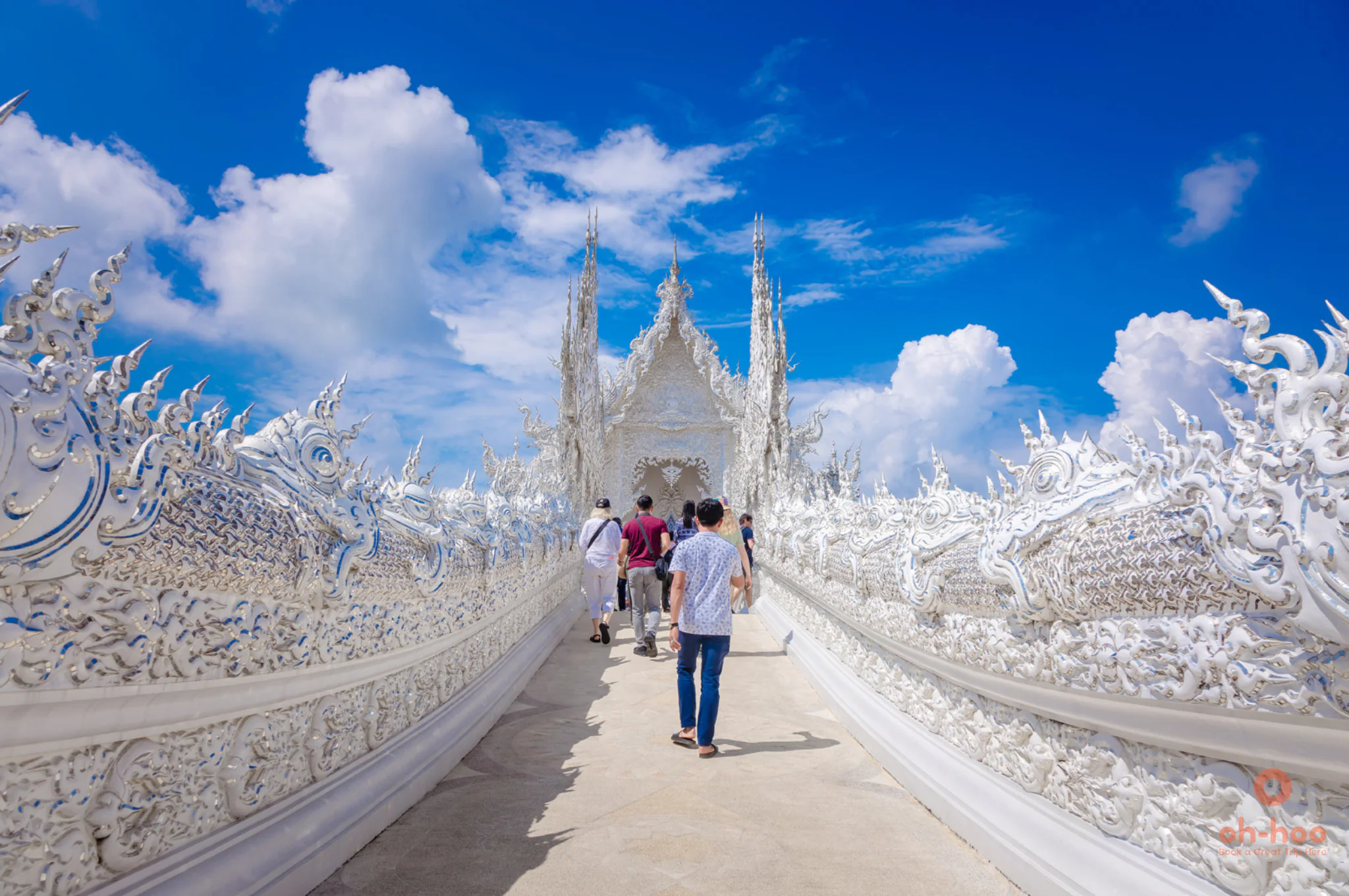
Few sights in Thailand stop travellers in their tracks quite like the White Temple Chiang Rai. Rising from the northern countryside in dazzling white and shimmering mirrored glass, it looks less like a temple and more like a dream carved into stone. But the White Temple is only half the story. Just a short drive away, the brooding Black House offers its haunting artistic opposite and together, the two form one of the most fascinating cultural day trips in all of Thailand. This guide walks you through both, plus everything you need to plan the perfect visit.
What Is the White Temple (Wat Rong Khun)?
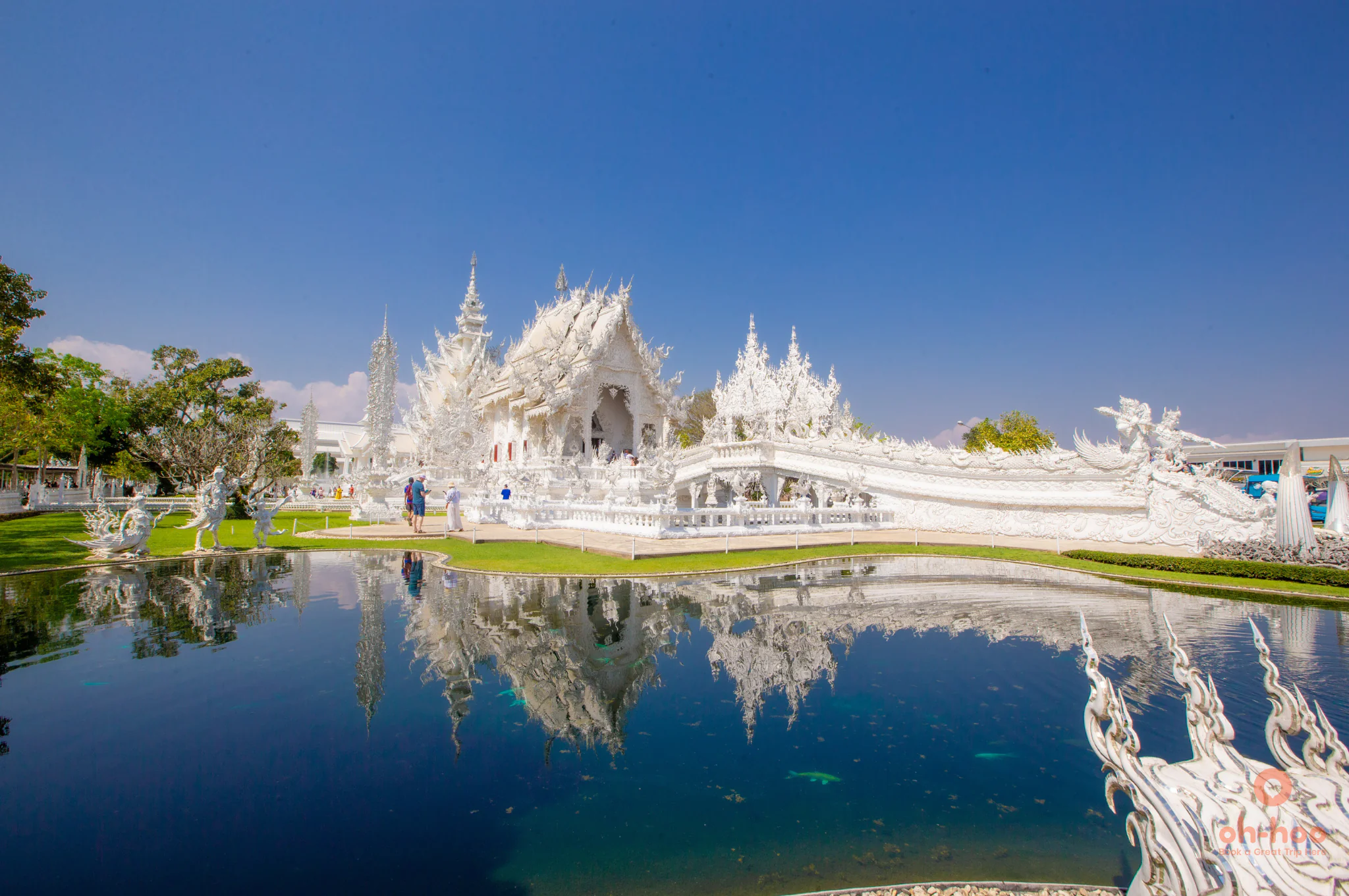
The White Temple, or Wat Rong Khun in Thai, is a contemporary Buddhist temple designed by acclaimed Thai artist Chalermchai Kositpipat, a celebrated Thai National Artist recognised by the Thai government for his outstanding contribution to visual arts, who opened it to the public in 1997 and continues to expand it to this day. Unlike the gilded temples found elsewhere in the country, Wat Rong Khun is entirely white, inlaid with thousands of tiny mirrored tiles that scatter sunlight into a sparkling glow. The white represents the purity of the Buddha, while the mirrors symbolise his wisdom shining across the earth.
Every element carries meaning. To reach the main hall, visitors cross a bridge over a pit of hundreds of outstretched hands reaching up from below a striking depiction of human desire and the suffering of hell. Crossing the bridge represents leaving worldly temptation behind and moving toward rebirth and enlightenment. Inside, the murals blend traditional Buddhist imagery with unexpected modern icons, a signature touch that makes the temple feel both sacred and startlingly current. It’s this fusion of deep symbolism and bold artistry that makes the Chiang Rai White Temple unlike any other temple in Thailand.
It’s worth knowing that the temple is still a work in progress. Chalermchai envisions a complex of nine buildings, a project not expected to be finished for decades, so every visit offers a slightly different experience as new elements take shape. Don’t miss the ornate golden building nearby, a deliberate counterpoint to the white, representing the body and worldly desires, in contrast to the white hall’s focus on the mind. Small artistic surprises are tucked throughout the grounds, rewarding visitors who take their time to wander rather than rush the headline shot.
White Temple vs. Black House — Why Visit Both
If the White Temple is a vision of light, heaven, and purity, the Black House is its deliberate shadow and that contrast is exactly why a black house tour pairs so perfectly with a visit to Wat Rong Khun. Known in Thai as Baan Dam, the Black House is not a single building but a sprawling complex of around 40 dark structures created by the late National Artist Thawan Duchanee, a Thai National Artist and one of the most influential figures in twentieth-century Thai art. Chalermchai’s contemporary and, in many ways, his artistic counterpoint.
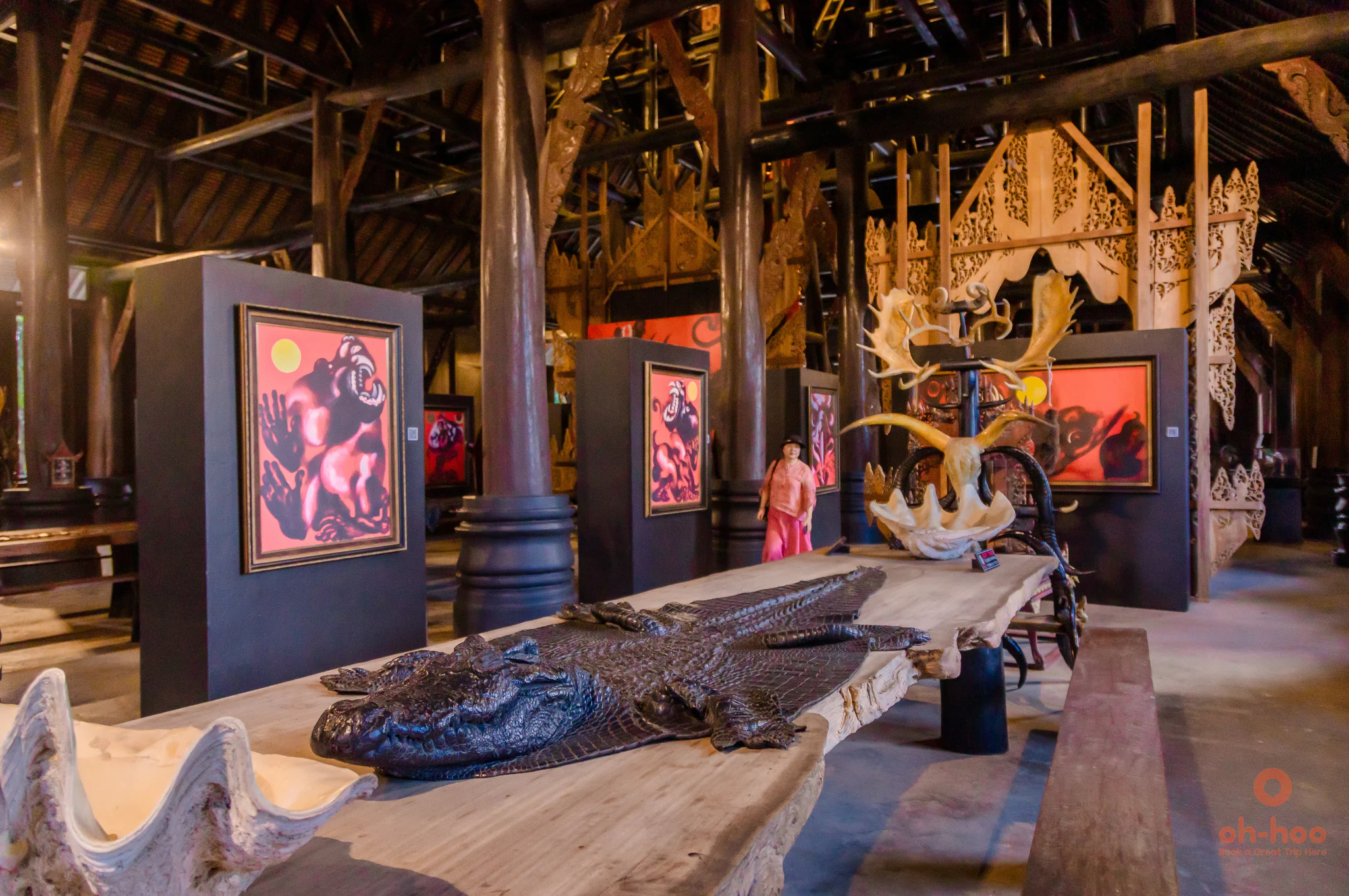
Where the White Temple is bright and uplifting, Baan Dam is dark, primal, and provocative. Built largely from black teak in traditional northern Lanna style, its halls are filled with animal hides, horns, bones, and carved wood, an unsettling but mesmerising meditation on impermanence, death, and the darker sides of human nature. Far from being merely grim, it’s a profound artistic statement that gives visitors plenty to reflect on, and seeing it right after the luminous White Temple makes both experiences hit harder. The two sites sit only around 25 kilometres apart, which is precisely why a black house tour and the White Temple are so commonly combined into a single unmissable day.
There’s plenty to explore at the Black House. Wander between the teak halls, step inside to study the collections of bones, shells, and hand-carved furniture, and take in the sculptures dotted across the leafy grounds. Where the White Temple dazzles at first glance, Baan Dam reveals itself more slowly, and many travellers come away finding it just as memorable and thought-provoking.
Understanding who created these two landmarks makes the experience richer. Chalermchai Kositpipat received the National Artist of Thailand title in 2011 in the field of visual arts, a recognition bestowed by the Thai government on individuals who have made an outstanding and lasting contribution to the nation’s cultural heritage. Born in Chiang Rai in 1955, he dedicated his life to Buddhist art and chose to build the White Temple in his home province as a gift to the land and to the faith. Thawan Duchanee, who passed away in 2014, received the same honour in 2001. Born in Chiang Rai in 1939, he became one of the first Thai artists to gain international recognition, exhibiting across Asia, Europe, and the United States. Where Chalermchai channelled his creative energy into the luminous and the sacred, Thawan embraced shadow, mythology, and the raw forces of nature. That both men came from the same northern province and chose to leave their life’s work there is no coincidence: Chiang Rai has long nurtured artistic ambition of the highest order, and visiting the White Temple and the Black House is, in a very real sense, walking through the life’s work of two of Thailand’s greatest creative minds.
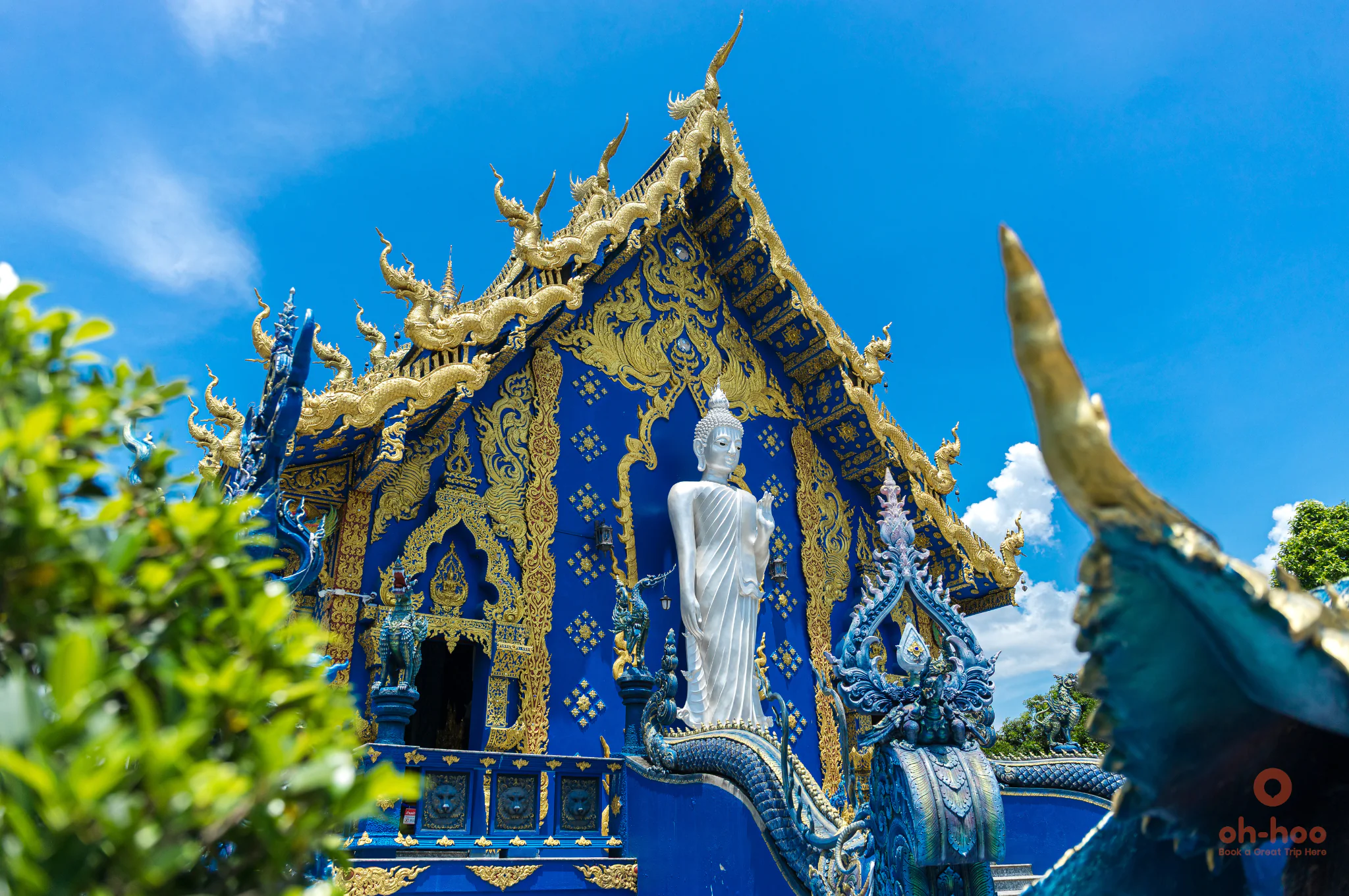
Many full-day itineraries add a third gem to the mix: the Blue Temple (Wat Rong Suea Ten), a jewel-toned sanctuary glowing in sapphire and gold. Completed more recently than the other two, the Blue Temple is smaller but no less striking, with its vivid indigo walls and a gleaming white Buddha at its heart. Together, white, black, and blue create a trio of contrasts that showcase the extraordinary artistic spirit of Chiang Rai in a single day.
How to Get to Chiang Rai from Chiang Mai
Most visitors reach the White Temple Chiang Rai as a day trip from Chiang Mai, roughly 180 to 200 kilometres away, about a 3 to 3.5 hour drive each way. You have two main options for making the journey. Going independently means renting a car or catching an intercity bus to Chiang Rai, then arranging local transport between the sites. It offers flexibility, but the long round-trip drive eats into your day, and coordinating transport between the White Temple, Black House, and Blue Temple can be fiddly. The far more popular choice is a well-organised full-day tour: a comfortable air-conditioned vehicle collects you from Chiang Mai, a guide provides the cultural context that brings each site to life, and all the driving and timing is handled for you. Given the distance and the number of stops, a guided day trip is the most relaxing and efficient way to see everything without stress.
What to Wear & Visitor Etiquette
As an active place of worship, the White Temple Chiang Rai enforces a modest dress code: shoulders and knees must be covered for both men and women. Lightweight, breathable clothing works best in the northern heat, think long trousers or a maxi skirt with a sleeved top, or carry a scarf to cover up. If you arrive under-dressed, coverings can sometimes be borrowed, but it’s easier to come prepared.
Etiquette matters here. Move quietly and respectfully, especially inside the main hall and note that photography is not permitted inside the ordination hall, where the famous murals are, in order to preserve the sacred atmosphere and the artwork. Outside, however, is a photographer’s paradise: take all the exterior shots you like, but avoid climbing on structures or blocking the bridge for others hoping to capture the same iconic view. The Black House and Blue Temple are more relaxed about interior photography, though the same respectful behaviour always applies.
Best Time to Visit
Timing can transform your visit to the Chiang Rai White Temple. For photography, early morning is magic. The low sun makes the white mirrored surfaces glitter, and you’ll beat both the heat and the tour-bus crowds that build through mid-morning. Late afternoon offers a softer, warmer light and thinning crowds as day-trippers head home, though you’ll want to keep an eye on closing times and the long drive back. The site is busiest from late morning to early afternoon, so arriving right at opening or later in the day makes for a calmer, more atmospheric experience. Season-wise, the cool, dry months from November to February bring the most comfortable weather and clearest skies during peak season, but for good reason. The rainy months can still be rewarding, with lush green surroundings and fewer visitors, just with a higher chance of an afternoon downpour.
FAQ
Is the White Temple free to visit?
There’s a small entrance fee for foreign visitors (Thai nationals typically enter free), which goes toward the temple’s ongoing construction and upkeep. It’s very affordable and well worth it. On a guided tour, entrance fees are often included and check your specific package.
How far is Chiang Rai from Chiang Mai?
Chiang Rai is roughly 180 to 200 kilometres from Chiang Mai, about a 3 to 3.5 hour drive each way depending on the route and traffic.
Can you visit White Temple in one day from Chiang Mai?
Yes. A one-day trip from Chiang Mai is the most common way to visit, and a full-day tour comfortably covers the White Temple, Black House, and often the Blue Temple too, with roundtrip transport included. Expect an early start and a full, rewarding day, but the variety of sights easily justifies the time on the road.
What should I wear to White Temple?
Modest clothing that covers your shoulders and knees, plus comfortable shoes for walking. Lightweight fabrics and a scarf for extra coverage are ideal in the warm northern climate.
The White Temple Chiang Rai is rightly one of Thailand’s most photographed landmarks but paired with the haunting beauty of the Black House and the shimmering Blue Temple, it becomes something greater: a single day that journeys through light, darkness, and everything in between. It’s a rare cultural experience that rewards both the eye and the mind, and it’s easily reached from Chiang Mai with the right plan.
Ready to see it all? Book the full-day White Temple & Black House tour with Oh-hoo Travel and experience the unforgettable art, symbolism, and contrasts of Chiang Rai in one seamless day.