Best Time to Visit Krabi: Weather, Seasons & Island Hopping Guide
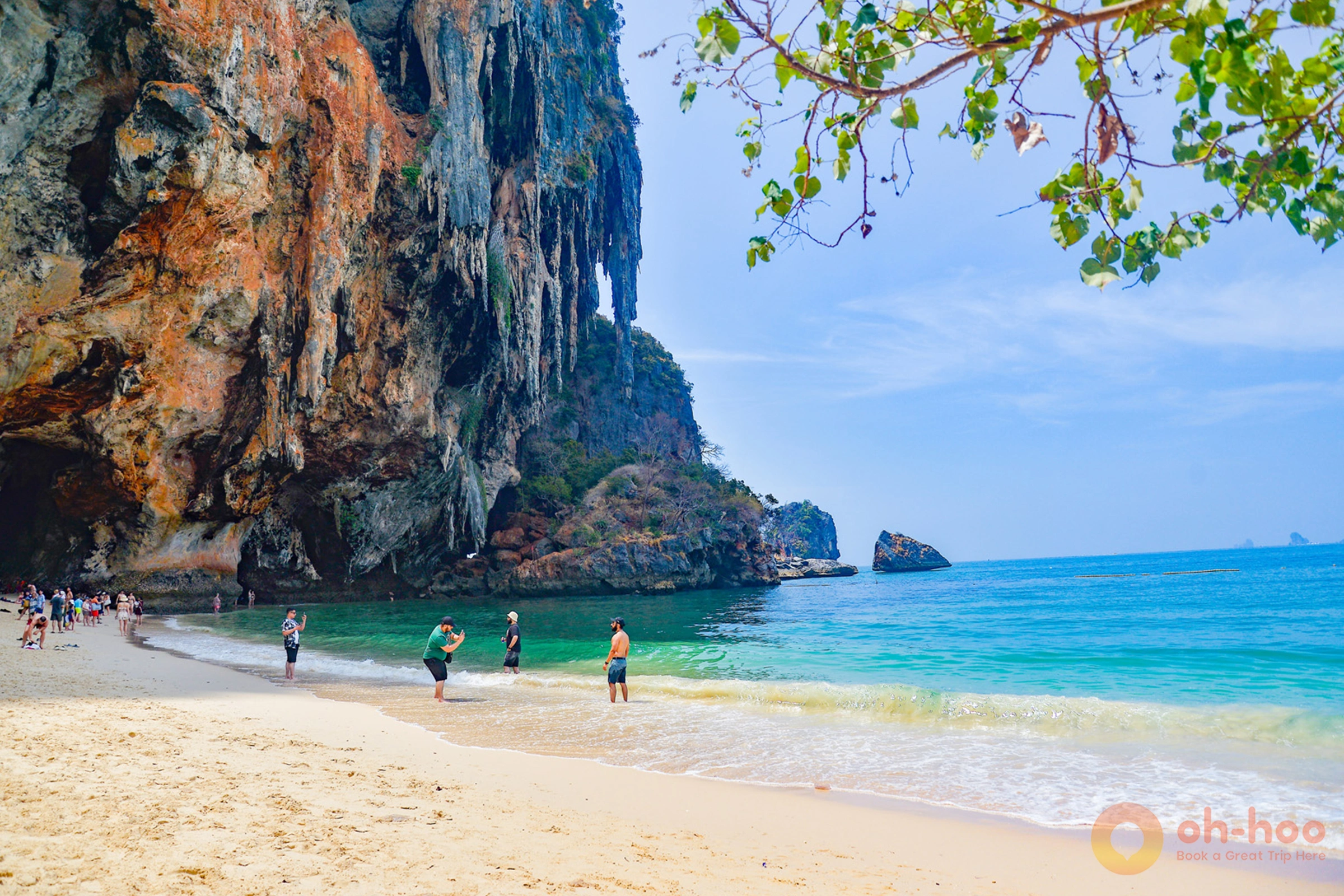
Most “best time to visit” guides just tell you when it rains. This one tells you what your trip will actually look like because the Krabi in your head, and on the poster, only happens in certain months. If you want that image of glassy turquoise water, sharp limestone cliffs against a hard blue sky, the postcard shot comes between December and March, with January and February the surest bet of the year.
If you prefer quieter islands, lush greenery, full waterfalls, and half-off prices, visit during the Green Season (June–September). This guide breaks down each month to help you find your ideal time.
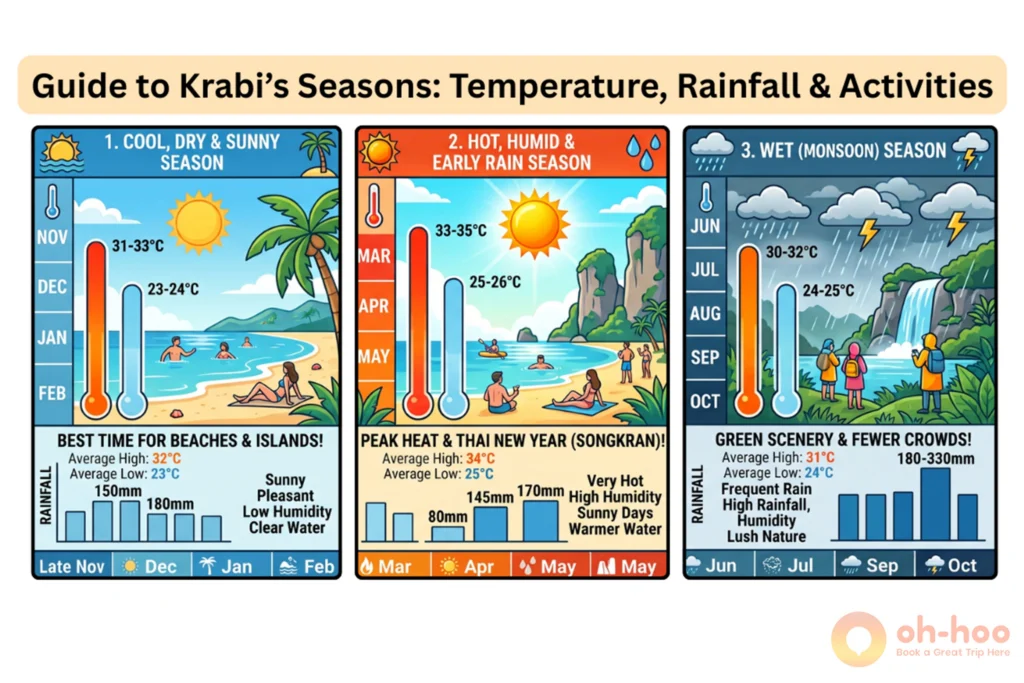
Krabi’s Three Seasons at a Glance
| Cool & Dry (Nov–Feb) | Hot & Dry (Mar–May) | Green & Wet (Jun–Oct) | |
| Sea | Clear, calm, deep turquoise | Warm, mostly calm, slight haze | Choppier, greener, less clarity |
| Sky | Bright blue, crisp | Bright but hazy in heat | Dramatic clouds, moody light |
| Crowds | High (peak) | Easing after April | Low |
| Price | Highest | High → dropping | Lowest |
| Poster shot possible? | Yes, best | Yes (mornings best) | Different look – lush/moody |
Month-by-Month: What Your Krabi Trip Will Actually Look Like
As the monsoon season begins to transition, weather conditions in Krabi generally start to stabilize. Sea visibility and sky clarity often improve between passing showers, and most island tour operators resume standard operations subject to local weather conditions. During this time, travelers typically experience brighter mornings, though occasional afternoon rain remains possible.
Coastal views and water clarity often gradually improve throughout the month, while visitor numbers usually remain moderate compared to peak season.
- Postcard shot: Weather permitting, conditions generally become more favorable, especially toward the end of the month.
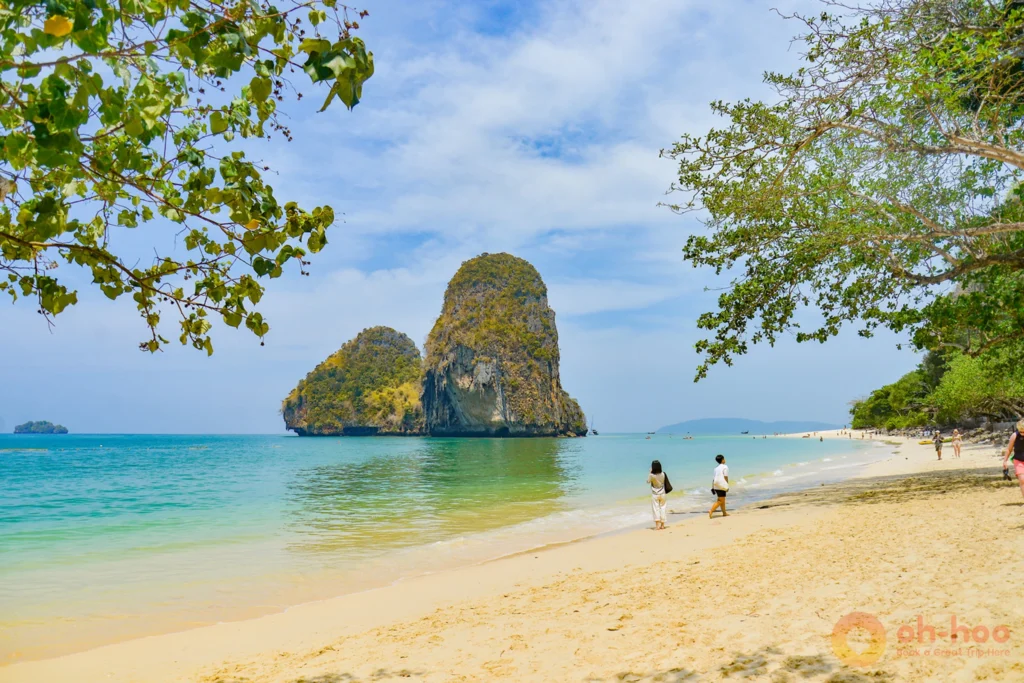
- December: Peak Postcard Season. This is Krabi at its glossy best. Skies turn a hard, cloudless blue, the sea reads deep turquoise against the grey-white limestone, and sunsets over the Andaman are clean and fiery. The trip you’ll get: the picture you booked the flight for. Bright light, calm clear water, every island open, golden afternoon glow on the cliffs. The catch is you share it this is peak season, so beaches, boats, and hotels are at their busiest and priciest.
- Postcard shot: the best of the year. This is also prime time to book a 4-island longtail day while conditions are flawless.
- Postcard shot: the best of the year. This is also prime time to book a 4-island longtail day while conditions are flawless.
- January: Cool & Crystal. The most comfortable month to be outdoors. Evenings feel almost fresh, days are hot but not brutal, and the humidity drops. The trip you’ll get: crystal-clear water with the best underwater visibility of the year, cool-ish mornings perfect for climbing and kayaking, and postcard skies most days.
- Postcard shot: excellent.
- Postcard shot: excellent.
- February: Statistically the driest, clearest, sunniest month in Krabi — and the crowds have thinned slightly from the Christmas–New Year peak. The trip you’ll get: reliably blue skies, mirror-flat mornings on the water, and cliffs that photograph tack-sharp. Prices are still high, but the conditions are as close to guaranteed as Krabi gets.
- Postcard shot: excellent.
- Postcard shot: excellent.
- March: Warming Up. The heat starts to build past 34°C, and the first pre-monsoon haze can soften the horizon, but the sea stays clear and calm. The trip you’ll get: hot, bright days, still-clear water, and beautiful hazy-gold sunsets. A great-value window as peak-season crowds fade but conditions hold.
- Postcard shot: still very good.
- Postcard shot: still very good.
- April: Songkran & Heat. Krabi’s hottest month, often nudging 35–36°C, with Songkran (Thai New Year) splashing across the country in mid-April. Afternoon showers begin to appear. The trip you’ll get: intense sun, warm calm seas, and a festive buzz around the 13th–15th. Heat haze can flatten the light by midday, so shoot early.
- Postcard shot: good, but haze creeps in.
- Postcard shot: good, but haze creeps in.
- May: Season Change. The southwest monsoon arrives, but rarely all at once. Rain comes in bursts rather than all day, and the sea starts to cloud up in the afternoons. The trip you’ll get: bright, usable mornings followed by heavier, more unpredictable afternoons; the water begins losing its dry-season clarity. Prices start to fall.
- Postcard shot: Mornings only plan your photos and boat trips early.
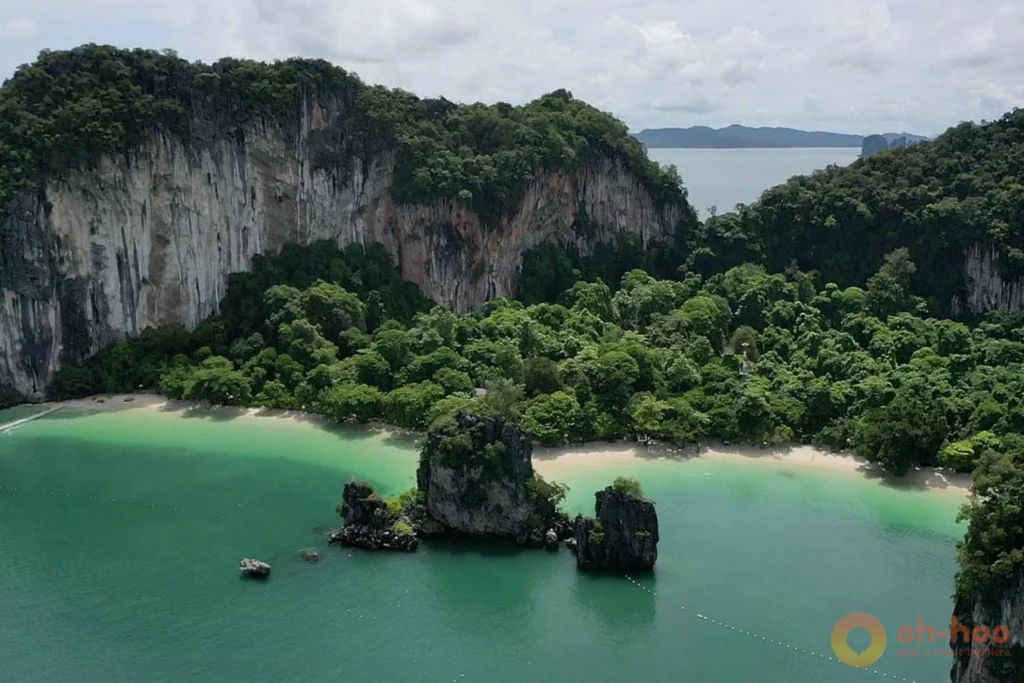
- June: Lush & Local. The landscape flips from bright to lush. Jungle glows, waterfalls swell, and dramatic cloudscapes build over the cliffs. The trip you’ll get: a moodier, greener Krabi, deep foliage, low mist on the karsts, and atmospheric light that photographs beautifully in a completely different way. The sea is less clear than high season, and it feels wonderfully quiet.
- Postcard shot: a different style swap: bright-and-turquoise for moody-and-dramatic.
- Postcard shot: a different style swap: bright-and-turquoise for moody-and-dramatic.
- July: Green Season Deals. Much like June, with the best value of the year. Hotels can run 40% or more below peak rates, and the islands feel like they belong to you. The trip you’ll get: green, cheap, and quiet, with rain in spells rather than sheets. Some Trang-side island trips run reduced schedules, so check before you book.
- Postcard shot: moody-lush over bright-blue.
- Postcard shot: moody-lush over bright-blue.
- August: Wettest Stretch. One of the wettest, windiest stretches, with rougher seas. Some boat trips, especially the Emerald Cave and Koh Lanta’s 4-island run, pause or cancel on rough days. The trip you’ll get: proper tropical weather, heavy downpours, low clouds, powerful surf, and jungle at its most vivid. Not the beach-poster trip, but a spectacular rainforest one.
- Postcard (beach) shot: unreliable
- Rainforest shot: superb.
- September: Still Green, Still Cheap. Similar to August and among the rainiest of the year, though the very end of the month can start to settle. The trip you’ll get: lush, dramatic, and bargain-priced, with the fewest tourists you will ever see in Krabi. Full waterfalls and glassy emerald pools are the real reward now.
- Postcard shot: mostly a jungle-and-waterfall trip.
- Postcard shot: mostly a jungle-and-waterfall trip.
- October: Transition Month. Statistically one of Krabi’s wettest months, but the tide turns during it: the back half often begins to dry out as the monsoon winds down.
The trip you’ll get: a gamble that improves as the month goes on. Early October still leans wet and green, while late October can start serving up the first clear, bright days of the coming season. Prices are still low.
- Postcard shot: improving, better in the second half.
Choose Your Trip Style Then Choose the Month
Work backwards from the trip you actually want:
- “I want the Instagram postcard shot”
Turquoise water, razor-sharp cliffs, cloudless blue sky. Go December–February, and if you want the single best odds, aim for January or February.
- “I want quiet islands almost to myself”
Trade the bright water for solitude and go June–September. Fewer boats, empty
beaches, and a green, dramatic backdrop just be flexible about sea trips. - “I want the best snorkelling visibility”
Aim for February–April, when the sea is calmest and clearest and underwater visibility is at its yearly best. - “I want lush jungle and full waterfalls”
Come July–September, when the rainforest is at its greenest and spots like the Emerald Pool and Krabi’s waterfalls are in full flow. - “I want the best price”
Travel May-October, when hotels commonly drop 40–50%, and flights ease too. - “I want to avoid rain without paying peak prices”
Target the shoulder edges late November or early March for near-dry-season conditions without the full peak-season premium.
What’s Open When: Island Access by Season
This is the detail that decides many trips. Most Krabi-side tours operate year-round, but daily operation always depends on weather conditions and, for national-park sites, on official park announcements. The table below is a general guide; always confirm with your operator close to the travel date.
| Tour | Nov–Apr (dry) | May–Oct (green/wet) |
| Krabi 4 Islands | Typically operates | Operates on suitable weather days |
| 7 Islands Sunset | Typically operates | Operates most days, weather permitting |
| Hong Islands | Typically operates | Operates on suitable weather days |
| Phi Phi | Typically operates | Runs year-round; crossings can be rougher |
| Koh Lanta 4 Islands | Typically operates | Reduced service; may pause on rough days or during low season |
| Emerald Cave (Koh Mook) | Typically accessible | Closed during the annual Hat Chao Mai National Park closure (dates set each year by the park; historically around Jun–Sep) |
If you are deciding between the headline Krabi runs, our Hong Island vs 4 Islands comparison breaks them down stop for stop. As a rule, if a specific island or the Emerald Cave is a must-do, the dry season removes most of the guesswork, but even then, check park announcements and operator updates before you commit to a date.
Festivals & Local Events Worth Timing Around
A few dates can shape your trip, for better or worse:
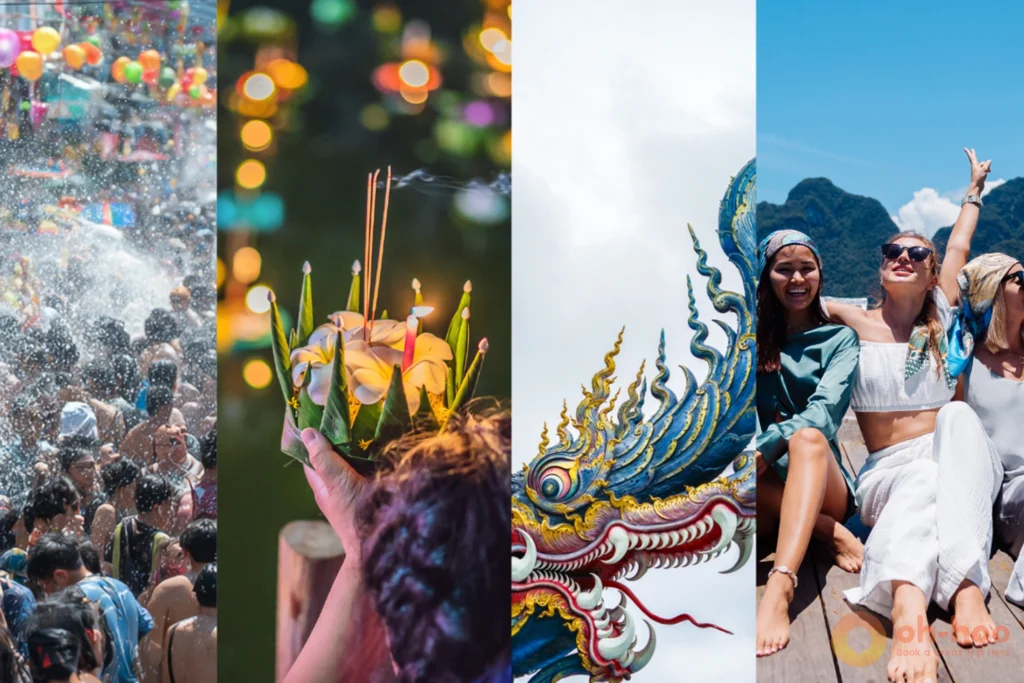
- Songkran (13–15 April): Thailand’s water-fight New Year. Huge fun, but expect closures and busier transport around the dates.
- Loy Krathong (November, on the full moon): the beautiful festival of floating candle-lit krathongs, magical on Krabi’s rivers and beaches.
- Additional Local Events & Festivals: Beyond major holidays, Krabi occasionally hosts seasonal beachside gatherings, cultural showcases, and music events (such as the Krabi Naga Fest at Khlong Muang Beach). As event dates and schedules can vary each year, it’s best to check with local tourism boards or your accommodation closer to your travel dates for the latest updates.
Rain in Krabi: What “Wet Season” Actually Means
“Wet season” sounds scarier than it is. Weather in Krabi changes quickly—a sudden tropical shower can wrap up as fast as it starts, often leaving behind clear, bright skies and refreshing air. Rain rarely spoils an entire day. With a bit of luck, you’ll easily catch great windows of sunshine and clear weather between passing clouds. Rather than constant rain, the main thing to keep in mind is the sea status, as stronger waves during peak monsoon months can influence boat travel and swimming safety.
Packing for Each Season
- Cool & dry (Nov–Feb): lightweight clothes plus a thin layer or cardigan for cooler evenings and boat breezes; reef-safe sunscreen and sunglasses.
- Hot & dry (Mar–May): your strongest sunscreen, a hat, and a refillable water bottle the heat and UV are no joke; light, breathable fabrics.
- Green & wet (Jun–Oct): quick-dry clothing, a compact rain jacket or poncho, a waterproof phone case or dry bag, and sandals with grip for slippery paths.
Best Time for Specific Activities
- Rock climbing at Railay: best November–March, when the limestone is dry and grippy, and the heat is manageable.
- Snorkelling: December–April for the clearest water and calmest seas. Diving: February–April, when visibility peaks.
- Sea kayaking at Ao Thalane: essentially year-round — the sheltered mangroves are calm even when the open sea is not, making it a great rainy-season option.
- Waterfalls and jungle (Emerald Pool, Klong Thom): July–October, when the water is at full flow.
- Sunset cruising: an evening trip works across most of the year a sunset-plus-plankton evening trip that runs most of the year is one of the more weather-resilient outings, and you can book the 7 Islands Sunset & Plankton Tour directly.
FAQ
Yes, with the right expectations. You trade guaranteed beach poster conditions for lush scenery, empty beaches, full waterfalls, and much lower prices. Rain usually comes in short bursts, but rougher seas can disrupt boat trips, so build in flexible days.
February leads the pack; it is typically the driest, sunniest month with the calmest seas, with December through April all offering excellent clarity for snorkelling and photos.
The green season, roughly May to October, when hotels frequently drop 40–50% and flights ease. September is often the single best value.
Most Krabi-side tours (4 Islands, Hong, 7 Islands, Phi Phi) operate year-round, subject to weather. The main seasonal closure is the Emerald Cave on Koh Mook, which shuts each year as part of Hat Chao Mai National Park’s annual closure the exact dates are announced by the park and typically fall in the monsoon months, so check the park’s latest announcement before booking. Koh Lanta’s 4-island trips also run a reduced schedule in the green season and can pause on rough days.
December to February for bright, blue, postcard conditions; or the green season (June–September) if you prefer moody, dramatic, lush scenes with atmospheric clouds. Shoot mornings for the calmest water and sharpest light.
Plan Your Krabi Island Hopping
Whenever you come, Krabi rewards a little timing. Chase the December–February window for that flawless turquoise-and-limestone postcard, or lean into the quiet, green, budget-friendly months for a Krabi few tourists ever see. Either way, the islands are the heart of the trip and the classic day out is the 4-island longtail run past Railay’s headland beaches. Ready to lock it in?
So which trip fits your window?
- Coming in the dry season (Nov–Apr)? The classic longtail run to Phra Nang, Chicken, Tup and Poda is at its postcard best: calm seas, clear water, easy beach time. The Krabi 4 Island Tour is the straightforward pick.
- Travelling in the green season, or want something weather-resilient? An evening trip is a smarter bet than a full open-sea day. The 7 Islands Sunset & Plankton Tour runs across most of the year and swaps midday sun for sunset colours and a plankton swim after dark.
- Not sure yet, or comparing itineraries? Read our side-by-side of the Hong Island vs 4 Islands tour before you book; the right pick depends on whether you want beaches or lagoons.
Whichever way you go, lock in a date early for the December–February peak and stay flexible in the green months. Ready to plan? Start with the Krabi 4 Island Tour, the most-booked day out, or pick the option above that matches your season.