Bioluminescent Plankton Krabi: Where & How to See Thailand’s Glowing Sea at Night
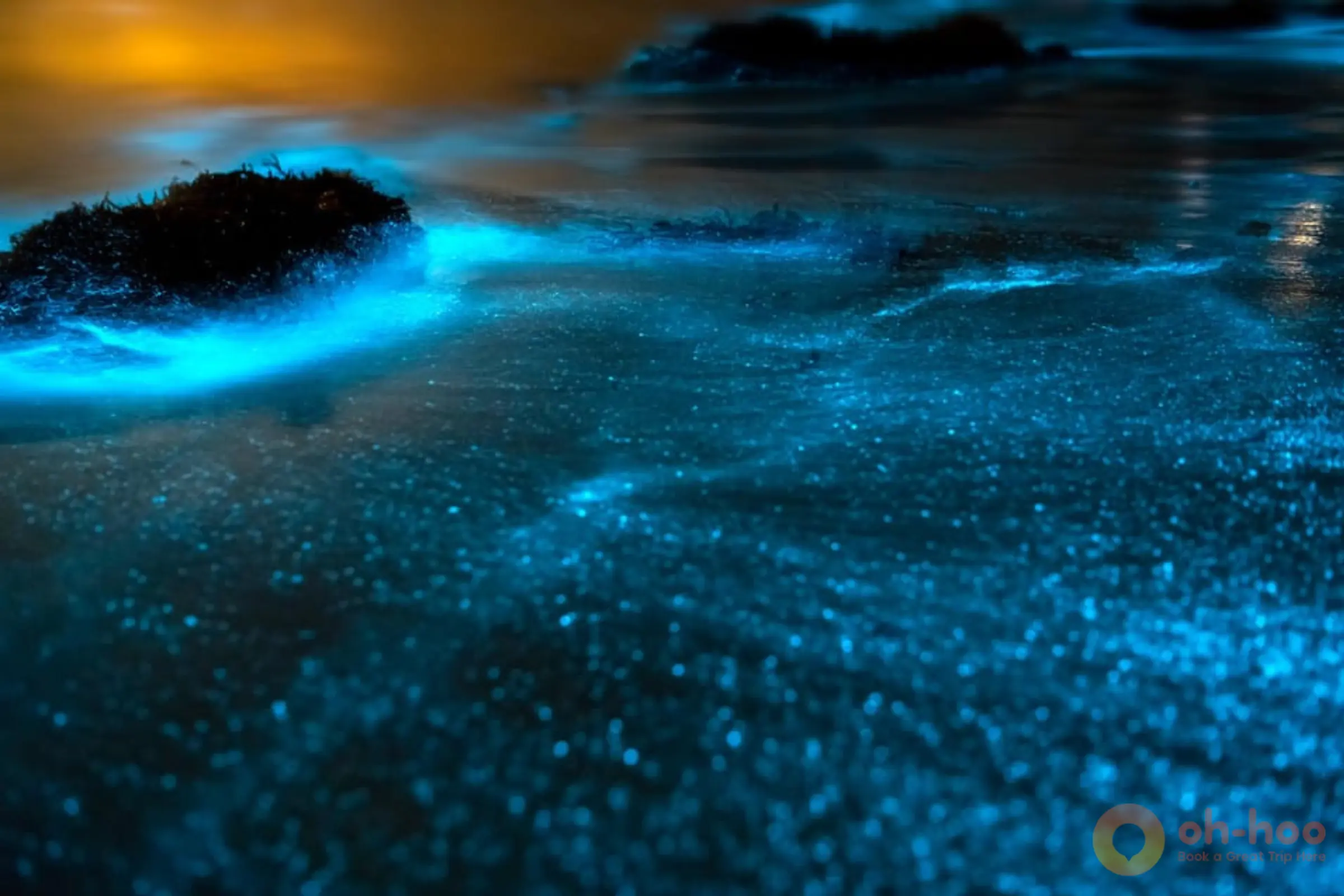
There’s a specific kind of magic that only happens after dark on the Andaman coast. Dip a hand into the black water, and the water lights up. Kick a foot; a comet trail of blue-green sparks follows it. This isn’t a filter or a stage effect, it’s a chemical reaction happening inside microscopic organisms floating in the sea, and Krabi is one of the few places in Thailand where you can reliably witness it. If you’re planning to see bioluminescent plankton in Krabi, this guide covers what causes the glow, where to look, the weather and moon conditions that matter, and the honest truth about photographing it (spoiler: your phone probably won’t).
What Causes the Glowing Effect?
The organisms responsible are called dinoflagellates, single-celled plankton so small you’d need a microscope to see one. The species most active in Thai waters is usually Noctiluca scintillans, sometimes nicknamed “sea sparkle.” They live near the surface in warm coastal water, and when they’re mechanically disturbed, such as by a fin kick, a paddle stroke, or a wave breaking, they emit a brief flash of blue-green light. It’s a defence response, thought to startle predators or attract bigger ones that eat the predator.
Two things matter for anyone planning to see them. First, they’re invisible during the day; the glow only shows against pure darkness, which means night-time viewing only. Second, they don’t glow constantly. You have to disturb the water to trigger the reaction. Standing still and looking at the sea = nothing. Swim, paddle, or trail a hand = sparks
Where in Krabi to See It
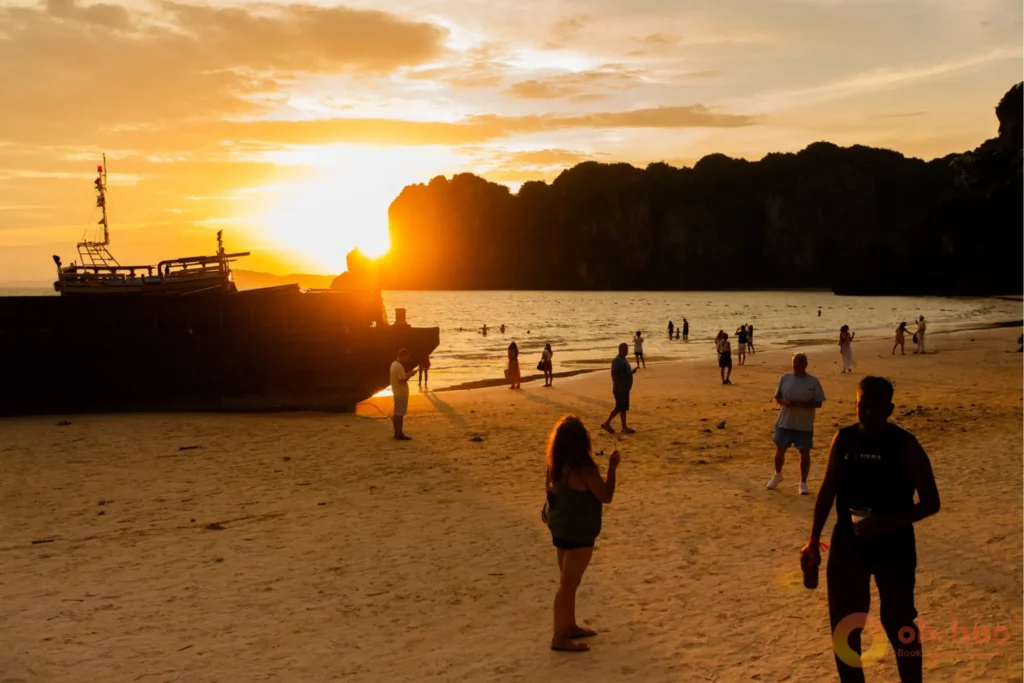
If you’re figuring out where to see bioluminescent plankton in Thailand, three conditions have to line up: warm, calm water, minimal light pollution, and a boat that can take you far enough offshore to escape the shore lights of Ao Nang or Krabi Town. Heading out at night offers a refreshing way to enjoy the sea without the harsh daytime heat. Away from coastal glare on a clear night, the lack of light pollution creates a magical ‘glow-in-the-dark’ effect – where the vibrant blue ocean below mirrors a starry sky above.
Most operators run their plankton stops around sheltered bays near the Hong Islands or in quieter pockets of the Phi Phi archipelago areas with deep enough water for a swim, protected from wind chop, and far enough from populated shorelines that the sky stays properly dark. Going out on your own is technically possible but unusual: night navigation, permits, and finding the right patch of water without local knowledge is more trouble than it’s worth. Almost everyone books a guided evening trip.
For a straightforward option that combines the Andaman island scenery with a plankton stop after sunset, Oh-hoo’s Krabi bioluminescent plankton night tour runs the standard format: late-afternoon departure, snorkelling and beach stops while there’s still light, dinner on the boat, then the plankton swim once the sky is dark.
What the Experience Is Actually Like
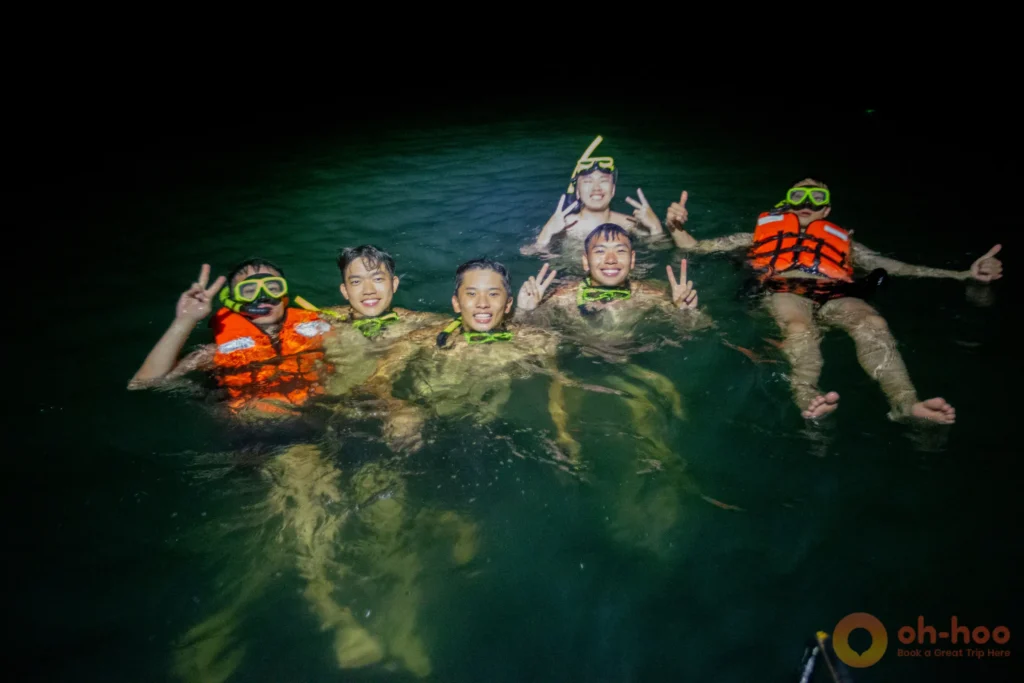
Unlike typical daytime excursions, a night plankton swim lets you experience the cool Andaman Sea without the scorching sun. The moment the boat cuts its engine and lights, the sea goes black. You slip in from the swim platform, usually with a life vest and a guide in the water, and start moving. The first kick is the one people remember. A pale-green trail follows your foot. Wave your hand through the water, and it lights up like a low-lit constellation. Cup your palms and lift; the drops between your fingers glow faintly for a second before going dark.
Now the honest part.
Your phone camera won’t capture it. This is the single most common source of disappointment. The glow is real and beautiful in person, but the light output is far too weak for a phone sensor to record you need a proper camera with a wide-aperture lens, high ISO capability, and a long exposure to get anything at all, and even then the results rarely match the Instagram-perfect shots on your marketing pages (which are usually taken with specialised gear, or in some cases enhanced). Come to experience it with your eyes, not your camera roll. You’ll enjoy it more. The other thing worth calibrating: intensity varies. Some nights the plankton density is so high that every movement paints the water; other nights it’s more subtle flashes here and there rather than sheets of glow. Both are the real thing. Neither is the tour operator’s fault.
FAQ
A chemical reaction inside single-celled organisms called dinoflagellates. When the water around them is disturbed by a swimmer, a paddle, or a wave, they emit a brief blue-green flash. It’s a defence mechanism.
The three or four nights around a new moon, during warmer months (roughly February to October), on nights with calm seas. Moon phase matters most; a bright moon washes out even a strong bloom.
Realistically, not with a phone. The glow is too dim for standard smartphone sensors. A mirrorless or DSLR camera with a wide-aperture lens (f/1.8 or wider), high ISO, and long exposure can record it, but even then, don’t expect the ultra-bright images from marketing photos. Enjoy it with your eyes.
Yes. Noctiluca scintillans, the species you’ll encounter in Krabi, is not toxic to humans on contact and doesn’t cause skin irritation. As with any night swim, follow the guide’s instructions, stay near the boat, and use the life vest provided.
Plan Your Night on the Andaman
Seeing bioluminescent plankton Krabi-side is one of those experiences that rewards travellers who arrive without over-inflated expectations. It’s real, it’s rare, and on the right night it’s genuinely unforgettable, but it’s a subtle, natural glow, not a fireworks show, and the best version of it lives in your memory, not your phone.
Ready to book? Book the Krabi bioluminescent plankton island hopping tour with Oh-hoo Travel: sunset over the Andaman, snorkelling, and beach stops while it’s still light, dinner on the boat, and the plankton swim once the sky is properly dark. Prefer a Hong Island-focused itinerary instead? Our Hong Island sunset tour with plankton runs the same evening format around the Hong archipelago.
Not sure whether an evening trip or a full daytime tour suits you better? Read our full comparison of sunset cruises vs. daytime tours before you decide.