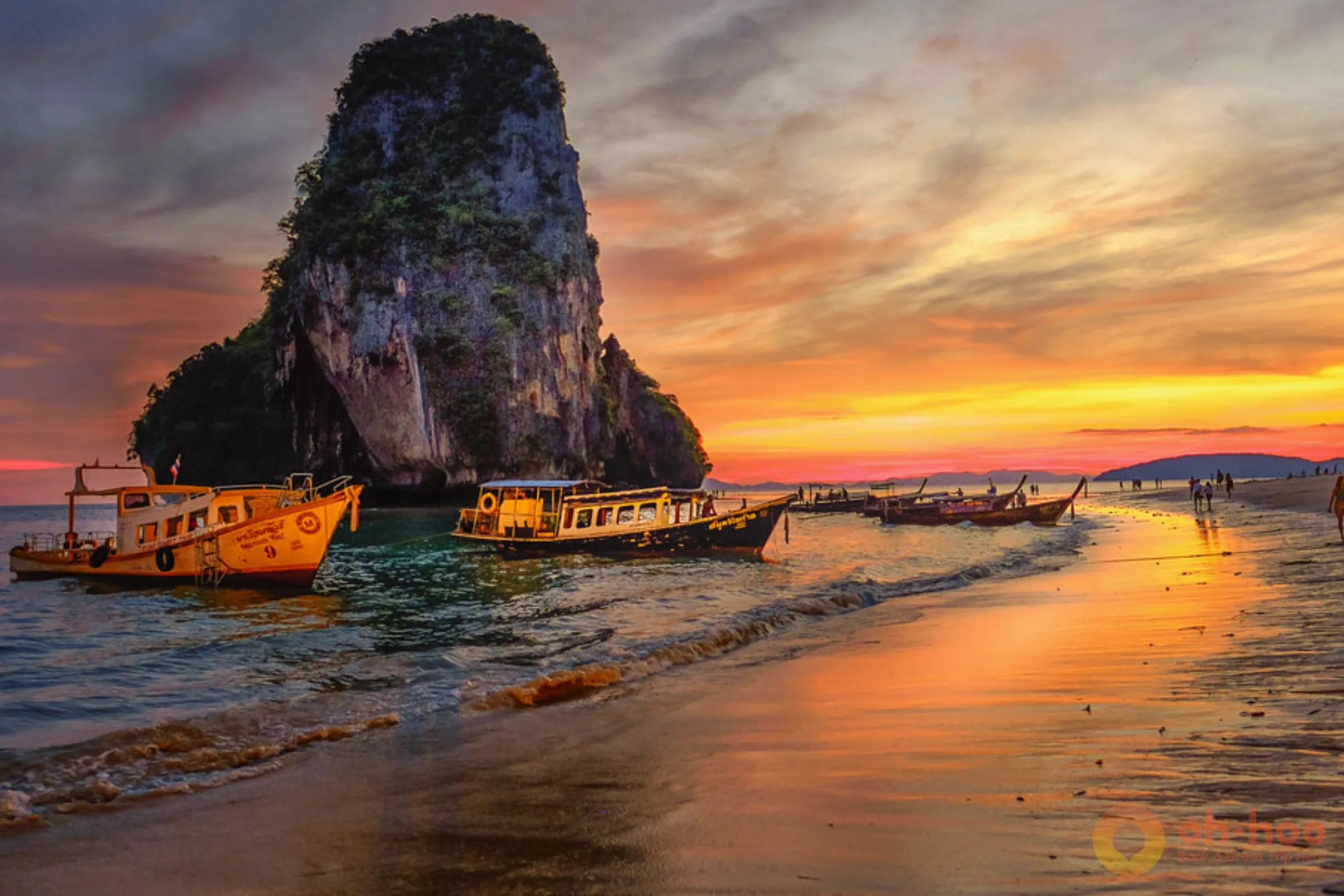
Yes. You can swim in it, splash in it, and go back to your hotel without giving it another thought.
The reason people ask is that “glowing water” sounds like something a science teacher would warn you about, and the word plankton sits uncomfortably close to the word jellyfish in most people’s heads. Neither instinct is right here, but both are worth answering properly rather than waved away – especially if you are about to get into the sea after dark with children, or a nervous partner, or both.
Is It Actually Safe?
The glow in Krabi’s bays comes from Noctiluca scintillans – a single-celled organism that flashes when the water around it moves. It has no toxin, no sting, and no interest in you. Bumping into it is closer to disturbing dust than meeting an animal. (For the biology of why it lights up at all, that is covered in our Krabi plankton guide.)
- It cannot sting or bite. There is no stinging cell, no barb, no venom – the whole organism is microscopic and soft.
- Nothing crosses your skin. The light is a chemical reaction inside the cell, and it does not transfer, stain, or irritate. You will not glow afterwards, which disappoints roughly one in three people.
- Swallowing a mouthful is a non-event. It tastes like seawater, because it is seawater. You would want to avoid gulping it down deliberately, for the same reasons you avoid drinking any seawater.
- Eyes are fine. Salt stings; the plankton does not add to it. Goggles or a mask make the glow easier to see anyway.
- Cuts and scrapes deserve the usual caution. Warm tropical seawater and open wounds are a poor combination regardless of what is glowing in it – that is a general rule about swimming, not about plankton.
- Children are fine, within the tour’s stated
- age limits. There is nothing about the organism that treats a small body differently. Rinse off afterwards, as you would after any sea swim. Freshwater, five minutes, done.
What About Red Tide?
This is the question underneath the question, and it deserves a straight answer. Some algal blooms genuinely are harmful – species that produce toxins, contaminate shellfish, and can irritate airways along the shoreline. They are usually referred to as harmful algal blooms or red tides, and they are not what you are swimming in on a night tour.
The confusion happens because both are “a lot of plankton in one place”. The difference is the species. Noctiluca, the one that lights up Krabi’s sheltered bays, is not a toxin producer, and the blooms behind red tide warnings are not the ones tour boats take swimmers into.
Practically: if there is a bloom advisory anywhere on the coast, local operators know before visitors do, and they move or cancel. That is another argument for going with a boat that runs this route nightly rather than improvising off a beach.
The Risks That Are Actually Real
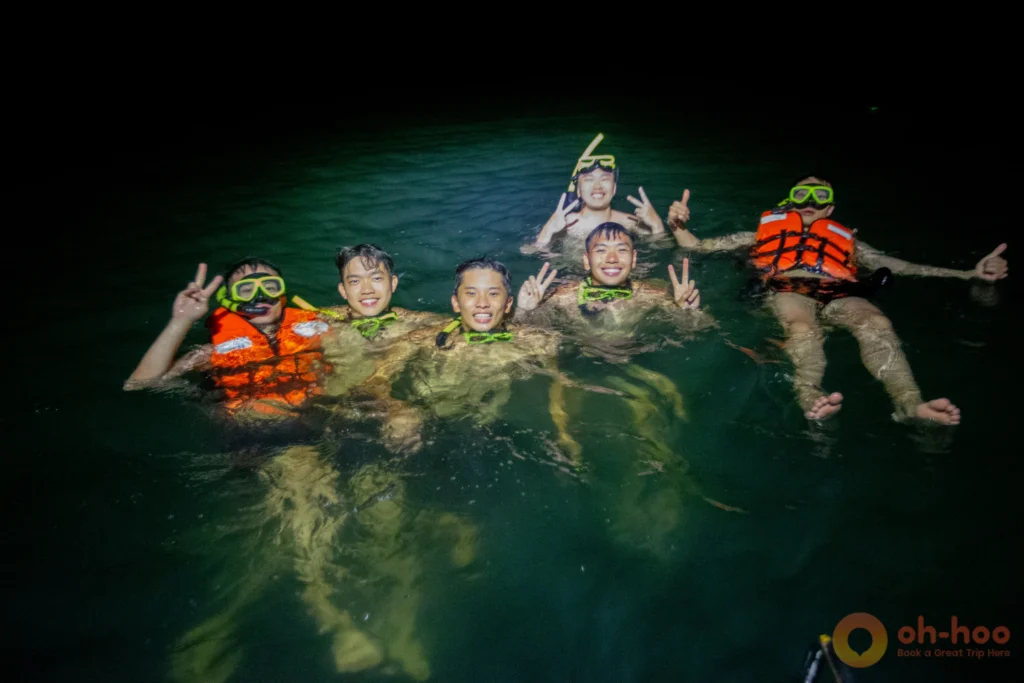
None of them are plankton. Swimming at night carries ordinary hazards, and these are the ones guides genuinely watch for
- The dark: Losing sight of the boat is the real danger, which is why swims happen in a tight group beside it and why nobody should drift off for a better spot.
- The boat itself: Stay on the swimmers’ side, always, and wait to be told when to get in and when to come back.
- Jellyfish, which are seasonal, occasional, and entirely unrelated to the glow: Guides check the water first.
- Overconfidence: Wear a life vest even if you swim well. It keeps you visible, keeps you afloat while you look down, and costs nothing.
- Alcohol: Dinner on these trips often comes with a beer. One is fine; the night swim is not the moment for the fourth.
- Listening to your guide: Marine life like sea snakes and jellyfish can be present during certain seasons. Tour guides want you to have the absolute best and safest experience possible, so if your guide decides a specific spot is unsafe for swimming on a given night, please follow their instructions strictly.
What It Feels Like Swimming In It
With the safety side fully settled, you can get in and simply enjoy it there’s nothing to watch out for beyond ordinary night-swimming sense. So the only thing left to manage is one expectation: it looks nothing like the photographs. Long-exposure images show an ocean of neon. Your eyes will see something quieter and, in person, better.
It starts when you move. Still water stays black; a kicked foot or a swept arm lights up in a spray of blue-white sparks that fade in about a second. The glow clings to you rather than surrounding you – it traces your hands, your wake, the drips falling off your fingers. Most people spend the first two minutes just waving one arm slowly and grinning.
Give your eyes time. Coming from a lit boat, you see very little for the first few minutes; after ten, the same water looks twice as bright. The people who report “there wasn’t much” are often the people who got out early.
And it is quiet. No sensation on the skin, no temperature change, no smell. You are swimming in an ordinary warm sea that happens to answer back when you touch it. And on a quiet night when the glow is faint, the trip is still worth it there’s plenty more to a Krabi evening than the beach.
Best Conditions to See It
This is a wild phenomenon, not a light show with a switch. Four things decide how good your night is.
- Darkness above all. The nights on and around a new moon are the good ones. A bright moon flattens even a strong bloom – the plankton is still there, you simply cannot see it against a lit sea.
- Warm, calm water. Sheltered bays away from wind chop hold the bloom together; choppy, rain-churned water scatters it.
- Distance from shore lights. Resorts, piers and passing boats all wash out the effect, which is why tours run to specific quiet bays rather than the nearest beach.
- Your own lights. Phone screens, torches and camera flashes ruin night vision for everyone in the water, including you. Put the phone away – and accept in advance that a phone camera cannot record this. It is too dim for the sensor, and the memory is better than the video would have been.
Even with all four aligned, nobody can promise a bloom on a given night. Operators say “visibility varies” because it genuinely does. Treat the glow as the bonus at the end of a day of islands and sunset, and a quiet night becomes a small disappointment rather than a wasted trip.
FAQ
No. The species behind the glow in Krabi does not sting, bite or produce toxins, and it does not irritate skin or eyes. Swimming in it is as safe as swimming in the same bay by daylight.
Only while you are in the water and moving. Step out and the effect stops immediately – nothing sticks to your skin, and nothing carries back to your towel.
Yes, within each tour’s stated age limits, and with the same night-swimming sense you would apply anywhere: life vest on, close to an adult, in the group beside the boat.
Often, yes. Running a hand through the water from the boat, or watching the wake and the anchor line, shows it clearly – which suits anyone who would rather stay dry or keep an eye on the children.
Planning the Night
Book around the moon, not the calendar. Find the new-moon dates for your trip, aim within a few nights of one, and pick an evening with calm weather – that single decision matters more than anything else you can control.
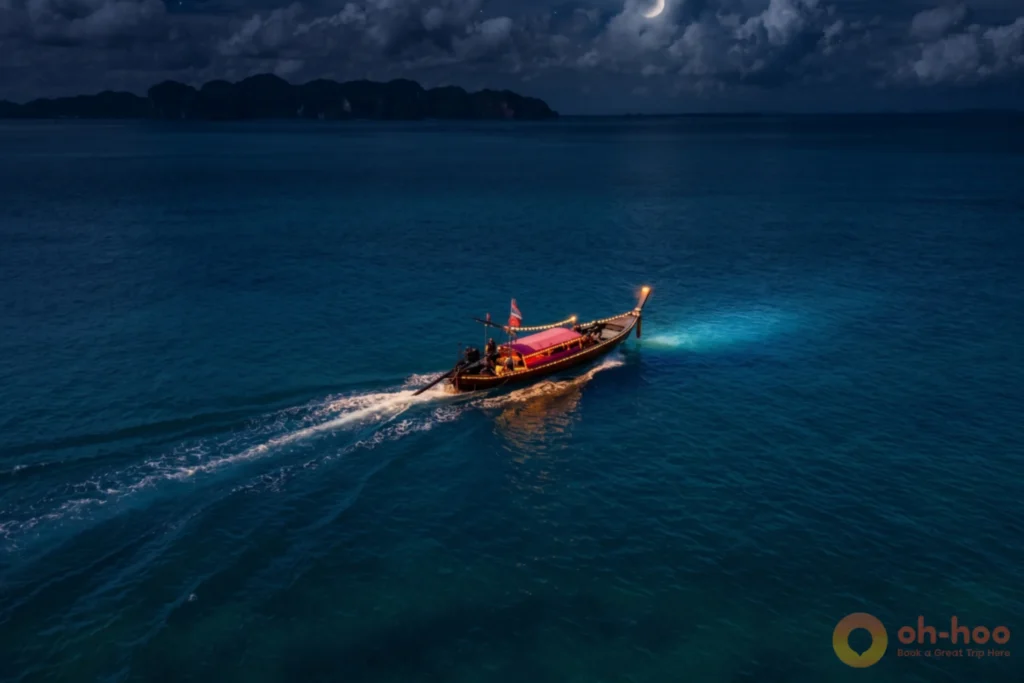
Both Krabi trips finish with the swim, so the plankton is the last thing you do rather than the only thing you paid for. The Krabi Bioluminescent Plankton & Island Hopping Tour spends the afternoon on the four-island run and the sunset at Railay before heading out to swim, with life vests, dinner, a guide, and insurance included.
Prefer limestone scenery and a barbecue on the sand? The Krabi Sunset Tour at Hong Island + Bioluminescent Plankton takes the Hong Island route and the lagoon, eats on the beach at sunset, then finishes in the water the same way.
Bring a dry bag, leave the phone in it, and get in early enough to let your eyes adjust.